
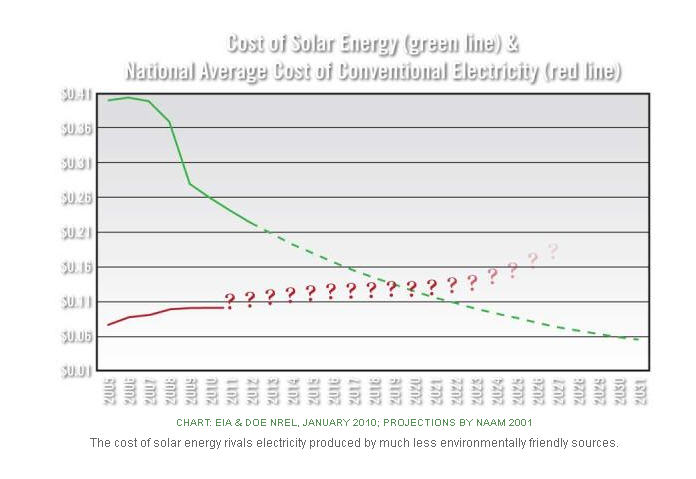
If you’re thinking about switching to solar energy, now’s the time. Prices have never been lower, and in some areas, PV systems can now produce electricity at a cost that’s competitive with — or even lower than — conventional electricity from coal, nuclear or natural gas.
Contact the appraisers at www.scappraisals.com for yourvalue questions regarding solar.
The cost of a residential solar power system has dropped about 40 percent in just the last two years. As a result, the lifetime cost of solar electricity produced by these systems now competes with conventional electrical power plants. In places where electricity sells for a premium, it’s competitive even without subsidies. In New Jersey, for instance, conventional electricity costs about 17 cents per kilowatt-hour (kwh). A residential solar power system can produce electricity at or slightly lower than that price, without any incentives.
Families in many major cities are paying 10 to 12 cents per kwh for conventional power, and soon, many in the Midwest will pay up to 15 cents/kwh for conventional power. Meanwhile, in the Midwest, the unsubsidized cost of solar power is about 13.7 cents/kwh, and a 30 percent federal tax credit drives that cost down to 9.6 cents/kwh.
Rebates that are available from some utilities lower the price even more. In St. Louis, Ameren offers a $2 per watt rebate based on installed capacity. A 5 kilowatt system would receive a $10,000 rebate as soon as the system is up and running. This incentive drives the cost of solar energy down even further — to 7.1 cents/kwh. That’s much cheaper than conventional power. In addition, the cost of solar electricity will remain the same for the life of the system — at least 30 years, maybe longer. This provides a tremendous hedge against inflation.

 Green Real Estate Appraiser