
Category Archives: energy savings

Is Ice the Future of AC?

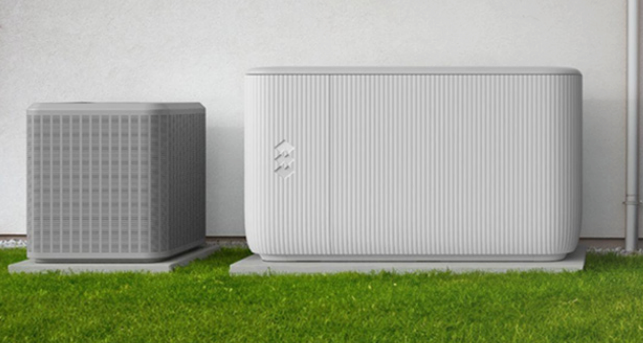
With rising temperatures, power grids are increasingly stressed. Air conditioning is the main driver of peak demand and the most difficult load to manage. Ice Energy’s behind-the-meter Ice Bear batteries offer utilities a proven way to permanently eliminate up to 95% of peak cooling load.

At Ice Energy, we specialize in providing cutting-edge thermal energy AC solutions and products in Rocklin and throughout Northern California. Our mission is simple—help homes and businesses cut down on energy use and save money. We manufacture the Ice Bear for commercial spaces and are now introducing the Ice Cub for residential homes.

These systems work by creating and storing ice, which then helps your AC unit cool your space more efficiently—especially during peak hours when electricity costs the most. It’s a smarter way to stay cool without overloading the power grid. Whether you’re looking into battery backups, HVAC replacements, or energy-efficient AC installs, our solutions are designed to work alongside your energy-saving goals.

If you’re searching for a better way to manage your utility bills and reduce your energy footprint, our thermal energy storage technology is the future—and we’re here to help make that future work for you.

Get more information at: https://www.iceenergy.com/

This is not an endorsement of any product or company. For informational purposes only.

Solar Panel Life Expectancy

Every solar panel has its own production profile depending on the type of solar panel you have (monocrystalline, aka “mono”; polycrystalline, aka “poly”; and thin-film are three main forms). Locate your specific solar panel on the manufacturer’s website under “product support,” and download the warranty provisions if they’re still available. Then, find the clause for the performance or power limited warranty. (Don’t confuse the performance warranty with the product defect warranty, which typically guarantees the equipment for 10 to 12 years.) Most companies offer solar panels with a performance warranty of 25 or 30 years. Mono and poly panels will lose a significant amount of performance the first year (known as the “burn-in period”), then gradually taper off indefinitely. Most thin-film modules won’t experience a significant first-year performance drop, but they’ve historically been lower-wattage modules with much lower cell efficiencies.

Read more at: https://www.motherearthnews.com/sustainable-living/renewable-energy/solar-power/solar-panel-life-expectancy-zm0z24fmzols/?r=5790I8320867C9Z&utm_type=Editorial&oly_enc_id=5790I8320867C9Z

Learn from the Brits – Winter proof your home and cut your fuel bills

  1. Find where the heat escapes

You need to find where warm air is escaping from your home and cold air is coming in. Places that may let in draughts include windows, doors, floorboards, chimneys and loft hatches.

Hold a candle near windows, doors and other areas to see if the flame dances around, suggesting a leak. Alternatively, try a thermal leak detector, such as the Black & Decker TLD100. This flashes blue for cold, green for normal and red for warm, so you know where there are air leakages.

2. Draught-proof your doors

For gaps at the bottom of the front and back doors, the most durable choice is a “brush” draught-excluder. You can make your own draught-excluders for internal doors using rolled-up towels, or tights filled with old clothes, or buy cheap or second-hand draught-excluders on sites such as eBay.

You can buy rubber draught seals from DIY stores and fit these around the sides of your external doors. Install metal keyhole-covers, and fit a letterbox brush to keep the heat in your home.

Read more at: https://www.theguardian.com/money/2022/oct/06/heatproof-your-home-top-tips-for-energy-efficiency