Category Archives: energy savings

How to Caulk Windows

It’s a simple fact: To stop cold air from entering your house or warm air from escaping, caulk the windows. It’s one of the best bangs for your buck to conserve energy because it is easy to do and the material and tools are inexpensive. All you need is a cartridge of good quality caulk and a metal caulk gun to apply it.

Once you use a caulk gun a few times, it’s easy to operate, but it can look intimidating at first. You put the cartridge into the gun, puncture the caulk tube with a utility knife or nail, pull the trigger of the gun and caulk squeezes out of the tube nozzle. The flow of caulk stops when you stop squeezing the trigger. You won’t find a better do-it-yourself project for a beginner than this one because you’ll learn an on-the-job skill you’ll use many times in your life as a homeowner.

A handyman will charge $153 to caulk six average size double-hung windows, which includes the labor and material. You can do the job for $65, the cost of a caulk gun and 12 cartridges of caulk. You’ll need a ladder to reach windows on the first floor and an extension ladder for ones on the second floor.

Read more at: http://www.chicagotribune.com/classified/realestate/sns-201310071200–tms–doityrslmsdiy-b20131014-20131014,0,5876544.story

Disclaimer: for information and entertainment purposes only

Find the Best Energy-Efficient Window Treatments

camera

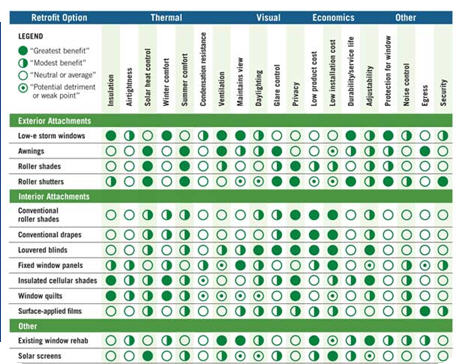
Windows have a huge impact on how our homes look, feel and function, so we want to get them right. But even the best windows have a hard time doing everything we want them to do — let in light and views, keep out the cold, etc. Happily, homeowners can make their windows perform better by choosing energy-efficient window treatments such as insulated curtains and blinds.


You can find some great solutions for how to make windows more energy-efficient — and your home more comfortable — without spending a lot of money. You can even make some insulated window coverings yourself.


Out the Window


Windows are often described as “holes in the wall” for good reason. The U.S. Department of Energy (DOE) reports that windows typically account for 25 percent of annual heating and cooling costs in older houses, and can even be responsible for as much as 40 percent.


Even those of us whose homes have high-performance windows want them to work better. “It doesn’t matter whether you get the best window in the world. The first thing that anybody is going to do is change the way it works,” says Peter Yost, vice president for technical services at the publisher BuildingGreen. These changes take place with the addition of blinds, insulated shades, thermal curtains or other coverings.


So how do we make window treatments work for us, and still be efficient? To get the most out of our windows, we need them to be adjustable. Depending on the season and time of day, we may want to let in as much light, heat, fresh air and view as possible — or do our best to keep those things out — in the name of comfort, energy efficiency and privacy.

windowRead more: http://www.motherearthnews.com/diy/energy-efficient-window-treatments-zm0z13onzmar.aspx#ixzz2g14OVU1A

SDG&E Hikes May Wait

so

Some utility rate increases linked to the shutdown of the San Onofre nuclear plant would be put on hold if the California Public Utilities Commission approves a newly proposed plan.


In late October, the agency is scheduled to consider whether to withhold reimbursement of $69.4 million to San Diego Gas & Electric for replacement power purchased from when the plant became idled in January 2012 until its permanent retirement in June. Such a withholding would limit SDG&E rate increases to $118 million for covering standard power-procurement costs this year, according to a statement from the commission.

How will higher utility bills effect the value of your home?  Contact the appraisers at www.scappraisals.com for your home value questions.  The appraisers at Southern California Appraisal Services are the forerunners in green property and energy-efficient real estate appraisals.

San Onofre was closed because of rapid wear on steam generators that were replaced in 2010 and 2011. The heat exchangers were supposed to extend the life of the plant, but the premature wear affected thousands of generator tubes carrying radioactive water.


The commission is conducting an investigation to determine who should pay for the San Onofre expenses since the facility was shut down. SDG&E, which owns a 20 percent stake in the facility, seeks to recover $808 million in assets from customers — on top of costs for attempted repairs and initial replacement power.


Eventually, the commission plans to consider whether it is justified and reasonable for utility customers to shoulder costs associated with the plant’s breakdown and permanent closure. The agency could call for a rebate and shift some expenses to utility stockholders.

Read more at: http://www.utsandiego.com/news/2013/sep/24/proposal-defer-nuclear-costs/

Disclaimer: for entertainment and information purposes only