Category Archives: Property spotlight

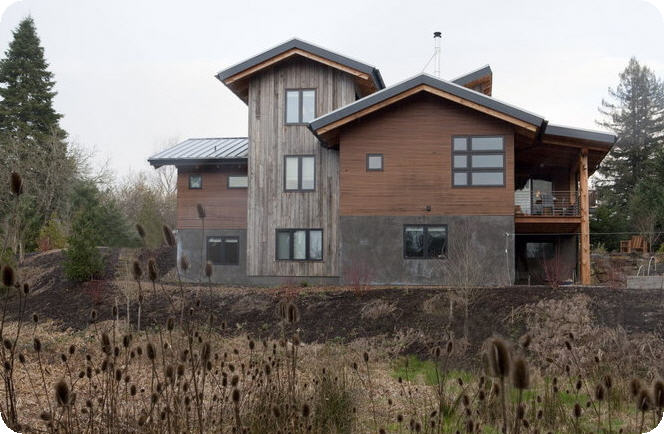
Property Spotlight – Portland; Clean Lines, Energy Efficient and Beautiful

Based on an open floor plan, the kitchen looks out to both the family room and the dining area, which opens to the outdoors. The design allows Bromfield — who loves to cook and says an hourlong prep is a quick one for her — to brew up dinners while Jake and Orpin can be engaged and nearby, or just playing with their rescued Brittany spaniel, Dexter.

THE SPECS: 3 bedrooms, 2.5 baths,  3,000 square feet, $320 per square foot, $960,000 total 

 THE MECHANICS:

Twenty solar panels provide 80 percent of the house’s annual electrical needs. Federal grants and tax credits softened the initial cost of $32,000 to $9,000.

A natural gas boiler delivers hot water to the main floor’s radiator system. The wall-mounted European-style flat-plate radiators allow the family to control the temperature in each room. Orpin — not a fan of forced air — says the system is less expensive than radiant heat, which he also does not love. The system goes on at 5 a.m. and off by 8 a.m. If the house cools too much in the evening, they light a wood stove in the family room. The stove, with a closed-combustion firebox, does not pull any air from the interior of the house.

Domestic hot water is heated by two additional solar panels. If needed, an exchange system with the main boiler kicks in. After tax incentives and credits from Ecotrust, this price tag dipped from $8,100 to $3,800.

Rainwater collection barrels are in the basement. Not burying them allowed Orpin and Bromfield to go with four less expensive 1,000-gallon food-grade tanks. The system filters water four times and can collect up to 6,000 gallons during the rainy months. They switch to city water in the summer if they run low. Cost was around $6,000 and Orpin predicts a 15-year break-even point.  

See and read more at: http://www.oregonlive.com/hg/index.ssf/2012/03/well-organized_home_design_kee.html

Disclaimer: for information and enterainment purposes only
Homes Made from Recycled Materials

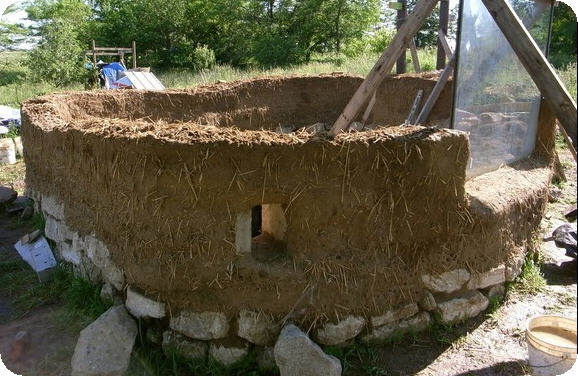
Cob House

Where: Rutledge, Missouri
Made From: Sand, Clay, Straw
To build his snail-shaped “cob house,” Brian “Ziggy” Liliola used 219 batches of cob, a wet mixture of straw, clay and sand. He chose the rustic building material used on 500-year-old thatched cottages in England, because of “how creative you could be” and “the flexibility and low cost and sustainable benefit” of building with local materials.

How would these properties be appraised?  Contact the appraisers at www.scappraisalserv.com for your appraisal questions

See more at: http://www.forbes.com/pictures/ekkl45ekl/beach-box-home/

America’s Oldest Net-Zero Home

 
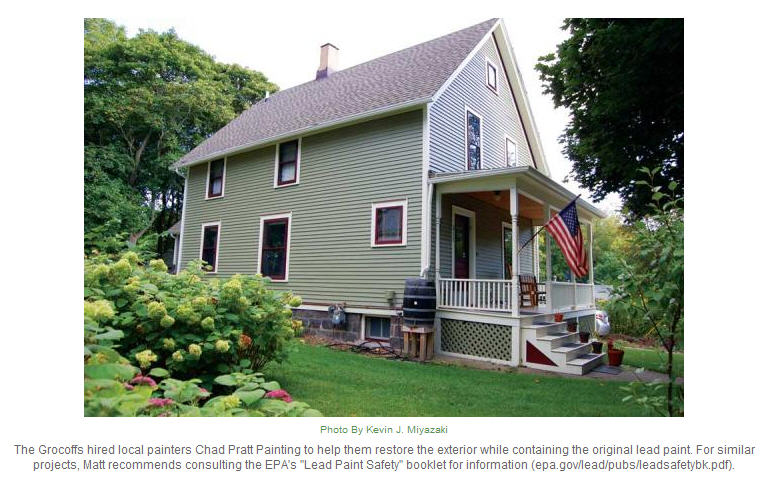
Turning a century-old Victorian house into a net-zero home might sound like an ambitious goal for a young couple in their first home, but Kelly and Matt Grocoff, a self-described “average couple” from Ann Arbor, Michigan, did just that, and now own the oldest home in America to achieve net-zero energy. In 2006, when Matt and Kelly bought their 1901 home in a walkable, historic neighborhood, they knew they wanted to go net-zero someday, but they didn’t imagine they would be producing more energy than they use in five short years.

“It was just a fantasy at the time we started looking for a house,” says Matt, a longtime green-building enthusiast and net-zero energy consultant who founded and hosts GreenovationTV. “We wanted to find an old house with good bones and restore it, then work toward net-zero. I thought net-zero would be 10 years away, but before we knew it, all the stars aligned with incentives and everything else, and we were able to get our solar panels up in 2010,” he says.
Energy Basics
Matt and Kelly were motivated to take on their efficiency overhaul because they wanted to help reduce our nation’s overall carbon footprint. “There are 130 million homes in the U.S. right now, and they account for almost a quarter of our greenhouse gas emissions,” Matt says. “We realized that even if every single new home from here on out were built to net-zero energy, it would do nothing to reduce our current carbon emissions.” Read more: http://www.naturalhomeandgarden.com/green-homes/solar-homes/net-zero-home-zmfz12mjzmel.aspx#ixzz1rw1Ee4Lm

 
Disclaimer: For information and entertainment purposes only