
Category Archives: Real Estate

Thinking of Buying a Foreclosure? Try the Foreclosure Cost Calculator

Homebuilders are switching tactics and confronting head-on one of their biggest nemeses: foreclosed houses that not only lure buyers away with deeply discounted prices but simultaneously depress the appraisal values of newly built homes.

At a packed session at the International Builders’ Show expo in Orlando Feb. 8-11, consultants and builders said that with gluts of foreclosures in major markets around the country — and more forecast to arrive in the next two years — the time has come to stop being passive and to begin aggressively educating buyers about the often hidden costs of buying foreclosures.
In Phoenix, one large builder, Fulton Homes, has put together the equivalent of an online truth squad — an interactive “foreclosure cost calculator” that allows shoppers to estimate the expenses they’re likely to encounter if they opt for a foreclosure.  The calculator uses what the company’s vice president, Dennis Webb, said are commercially available expense averages for acquiring, repairing and outfitting foreclosed houses of varying sizes, conditions and price levels in the area.

Say you’re shopping for a home to live in, rather than to rent out as an investment. You locate a number of foreclosures at low listing prices. You’re also aware of newly constructed homes that appear to carry higher prices for similar lot sizes and square footage.

The cost calculator prompts you to input the size, price and physical condition of the foreclosures. Say one of them is listed for $110,000 with 2,125 square feet of living space. Based on a drive-by, you estimate the overall condition to be fair — not terrible, but not great either. For that foreclosure, according to Fulton’s data, the typical post-acquisition costs — the repairs, new equipment, appliances and other improvements to make it adequate for you and your family — would add another $32,288 to the price you pay.

Likely expenses include an estimated $1,063 in appliances, $2,125 in electrical upgrades, $3,613 in windows, $5,525 for flooring and carpeting, $5,695 for cabinets, $1,913 in plumbing, $1,488 for drywall, $1,399 for the roof, $683 for interior cleaning, and a long list of others. The calculator also identifies possible legal fees, such as $1,500 in eviction costs if the property is still occupied, plus lawyers’ bills for title and lien complications.
Next to the calculator — here comes the big sell — Fulton offers you a look at some of its own newly built homes that are in the same general price range. They come with none of these add-on costs and instead have extended warranties on construction, appliances and equipment plus independent third-party inspections. Webb said in an interview that the calculator has been “amazingly effective” in opening the eyes of home shoppers to the “dark side” of foreclosures, and has helped the company rack up rising sales in a market where 46 percent of local listings are foreclosures.

Read more here: http://www.miamiherald.com/2012/02/19/v-print/2646677/the-dark-side-of-buying-a-foreclosure.html#storylink=cpy

Calculator: http://www.fultonhomes.com/foreclosure-calculator

Disclaimer: for information and entertainment purposes only
San Diego – Urban Farming Gains Council Backing

The San Diego City Council voted this week on myriad changes that allow residents to raise goats and chickens on their property, while enabling groups to grow crops on vacant lots in commercial zones without having to cut through a thicket of red tape.

The changes came on a unanimous vote that Councilwoman Lorie Zapf called regulatory relief and Councilman Todd Gloria called common sense.

“It’s going to add to the quality of life in our city,” Gloria said.

“As we become denser and more vertical in our communities, were going to need more opportunities to expand urban agriculture and grow our own food where we can.”

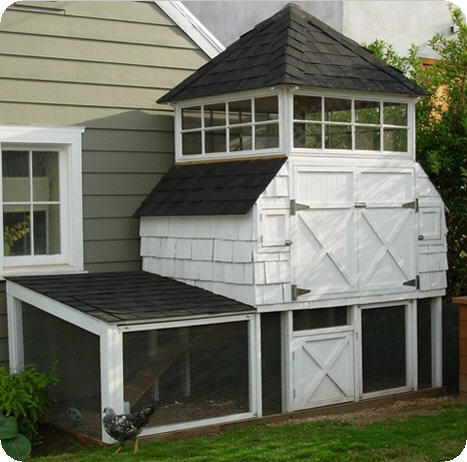
Under the new rules, residents in most houses can keep up to five chickens. If a coop is kept at least 15 feet from property lines, a resident can keep up to 15 chickens. If the coop is at least 50 feet from any residential structure, a resident can keep up to 50 chickens. Coops have to be predator proof, ventilated and clean, while providing at least 6 square feet per bird.

Roosters are still off limits.

Under the old rules, residents could keep up to 25 chickens, but they had to be kept at least 50 feet from residential structures. That effectively banned them.

Goats are now allowed at single family homes, though males must be neutered and the animals must be of the miniature variety. Goat products, such as milk and cheese, must be for personal consumption only.

Finally, beekeeping will now be allowed in single-family areas, though no more than two hives are allowed and they must be at least 15 feet from a neighbor’s home and 20 feet from a street, alley or sidewalk. Hives must be in a protected area and screens are required in most circumstances

Read more at: http://www.utsandiego.com/news/2012/feb/01/urban-farming-gets-a-boost/

Disclaimer: for information and entertainment purposes only
Short Sales Can Mean Bonuses for Some Homeowners

At first, the San Leandro woman, who had fallen behind on her condo payments, thought the letter was a scam. “You could sell your home, owe nothing more on your mortgage and get $20,000,” it proclaimed in large type.

“I almost ripped it up,” she said.

But the letter was sent by JPMorgan Chase, the bank behind her mortgage. And after she sold her condo two weeks ago for $98,000 – a third of what she owed on it – Chase indeed gave her $20,000 as an incentive payment, according to the woman and her real estate agent, Jasmin Rhodes of Prudential California Realty.

“I’m not sure why I was so blessed to be given that opportunity,” said the woman, who asked that her name be withheld for personal reasons.

Contact the appraisers at www.socalappraisalserv.com to determine what your property is worth before negotiating a short sale.

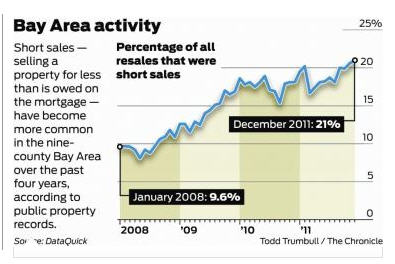
In a new development, banks are now selectively offering substantial sums of money – up to $35,000 – to some homeowners to encourage short sales, in which homes are sold for less than is owed on the mortgage.

Real estate experts said that banks can net bigger proceeds in short sales by sidestepping the costs, lengthy timeline and uncertain sales prospects of foreclosures. With delinquencies continuing to mount, quick disposition of some homes makes sense for the banks and for the overall housing market.

Read more: http://www.sfgate.com/cgi-bin/article.cgi?f=/c/a/2012/02/08/BUMS1N4S85.DTL#ixzz1lu1HCDlI