
Home Lenders Loosening Up – ?

What was so unusual about Phillip Ratliff’s experience in getting approval for his first mortgage was that it wasn’t difficult at all — even though he could afford a down payment of only 5 percent.

In the years after the housing bubble burst, borrowers had to practically promise their firstborn child to secure a mortgage.

Need to know LTV ratios?  Contact the appraisers at www.scappraisals.com for your value questions.

And while the requirements are still pretty rigorous, particularly for those with less than perfect credit, there are signs that at least some regional lenders and mortgage insurers are beginning to ease up. Some regional banks and credit unions are even offering products that vaguely resemble the more aggressive financing that became all too common during the boom days and eventually got many borrowers into trouble.

The piggyback loan, for instance, is back, mortgage lenders and brokers said. That is when borrowers take out two mortgages simultaneously (or a mortgage and a line of credit) so they can avoid the private mortgage insurance required on traditional mortgages for more than 80 percent of the home’s value.

And some credit unions, including Navy Federal and NASA Federal Credit Union, are offering 100 percent financing, at least in markets where home values have stabilized and appear to be on the upswing. U.S. Bank and Wells Fargo said they still allowed use of piggyback loans.

The big difference this time, lenders and mortgage brokers say, is that the loans are not being made to just anyone but to borrowers who can afford to pay them back (at least for now).

Read more at: http://seattletimes.com/html/businesstechnology/2020793690_pfdownpaymentxml.html

Disclaimer: for information and entertainment purposes only
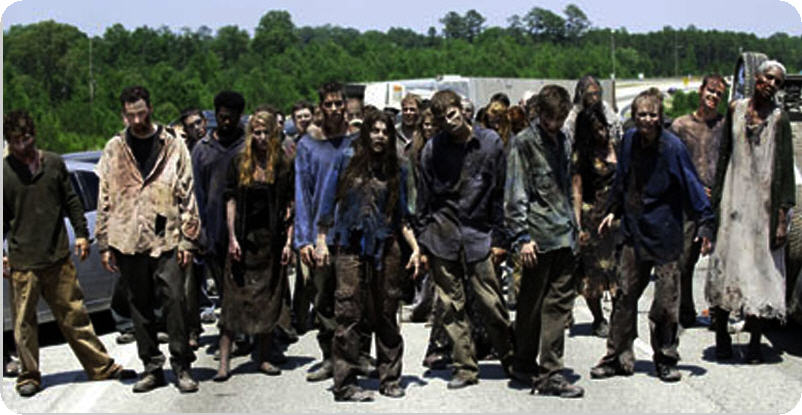
What is a Zombie Foreclosure and Who is on the Hook?

zombie

In a zombie foreclosure, the owner has gotten a foreclosure notice and subsequently packed up and moved, apparently thinking it’s over — the banks will finish the job. But many banks, for various reasons, haven’t followed through with the rest of the process, and the homes languish in the absent homeowners’ names.

And the homeowners, sometimes years later, find out they’re still on the hook for property taxes.

Contact the appraisers at www.scappraisals.com for your value questions.

There are about 302,000 “zombies,” according to RealtyTrac, a housing data company that studies foreclosure activity.

In an edited interview, RealtyTrac Vice President Daren Blomquist discussed how zombie foreclosures affect their communities (and, belatedly, their former owners), and where we seem to stand, as a nation, in our efforts to put the foreclosure horror show behind us.

Read more at: http://www.chicagotribune.com/classified/realestate/foreclosure/sc-cons-0418-umberger-20130419,0,2297043.column

Disclaimer: for information and entertainment purposes

The Worst Home Improvements for the Money

The “10 Best Home Improvements” is an oft-cited list in newspapers and shelter magazines. But what about the worst improvements? Since the bad ones rarely rate a mention, here’s a look — realizing, of course, that we’re not talking about personal taste, need or comfort. This list, rather, comes from a strictly return-on-investment point of view.

Contact the appraisers at www.scappraisals.com for your “added” value questions.

Swimming pools. Pools top everyone’s list of don’t-do-its, if only because not everyone wants one. So if you put a pool in your backyard, you are eliminating better than half your potential market, and you haven’t even put up a “For Sale” sign yet. You want to appeal to the largest buyer pool possible, no pun intended.

Beyond that, there’s the cost. The experts maintain that unless you are in a neighborhood where pools are an anticipated amenity, not an unexpected one, you’ll be lucky to recoup half the cost. Ditto for basketball and tennis courts.

Doug Rogers of Century 21 Millennium in Pineville, La., recently went on a listing appointment in a subdivision of $200,000 houses. Once he got there, the owners “couldn’t wait to show me” their new $45,000 pool. And, of course, they wanted to ask $260,000 for their otherwise ordinary house.

At closing, though, the pool netted them just $7,000, which means they took a loss of $38,000.

Better to join a country club or perhaps the YMCA. In Virginia, where pools are good only three months out of the year, John Statton of Re/Max Action Real Estate in Mechanicsville, Va., says you can join a local pool for $300 a year — without the increase in homeowners’ insurance that owning a pool brings.

Read more at: http://www.chicagotribune.com/classified/realestate/home/sc-cons-0411-bad-home-improvements-20130412,0,2176117.story

Disclaimer: for information and entertainment purposes only