
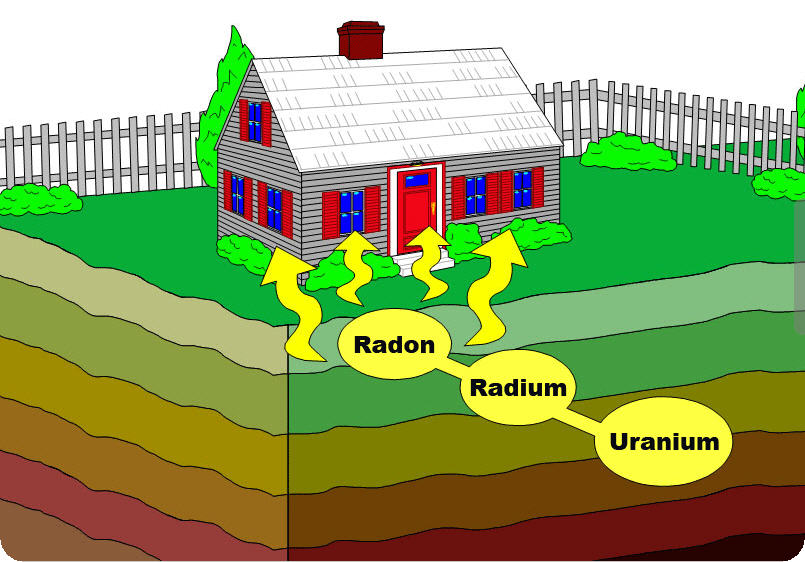
Radon is a naturally occurring form of radiation. The tasteless, odorless, invisible gas which comes from the breakdown of uranium in soil, rock and water. It seeps into homes and results in almost 20,000 lung cancer deaths a year according to the EPA.
How do you know if you have Radon in your home? You can get a Accustar certified test from your local home center ($25). If you get readings above 4 picocuries per liter of air (pCi/L) in the U.S., immediately call your local EPA for a list of certified mitigation contractors. Done incorrectly you could risk increasing radon levels and compromising your home’s air quality. For around $800 to $2500 your house could be more safe.
 Removing Radon from your home
How will this effect value? Real Estate Appraisers do not do these test when inspecting properties. Usually the only way we find out about the problem is when the home owner notifies us of it. If we were notified we would determine how much it would cost to solve the problem and how that cost would affect value. Contact the appraisers at www.socalappraisalserv.com for your value questions.
Would we recommend a person considering buying a property to invest in a $25 test kit – YES.
Disclaimer: For Information and Entertainment Purposes Only.

 Green Real Estate Appraiser