
Tag Archives: gas prices

Might Want to Reconsider an Electric Vehicle; CA to Pay More for Gas with Increased Excise Tax

Californians are conserving fuel and being penalized for it!!!!  We are going to be made to make up budget shortfall for conserving!!!

ec

As if we don’t already pay enough for gas in California, come this summer we may be taxed on it even more by the state.

The tax Californians pay for each gallon of gas they buy — called the excise tax — is expected to increase 3.5 cents per gallon in July to 39.5 cents per gallon.

The state Board of Equalization — charged with setting the rate since 2010 — will meet Tuesday in Culver City to consider about a 10 percent increase because previous tax collections fell short of budgeted amounts. The excise tax isn’t the only one we pay at the pump. The state also charges 2.25 percent in sales tax, and the federal government charges 18.4 cents per gallon in excise tax.

So how much more will you pay? If you’re like most Americans, you drive an average of 15,000 miles per year. And if you figure you get 20 miles per gallon, that means you’d buy 750 gallons of gasoline. Under the current system, with the average gallon of gas in California costing $4.217, over the year you would buy $3,162 in gas, including $408 in federal and state excise taxes, and about $70 in state sales tax.

That doesn’t include local taxes, like the half-cent San Diego charges. If the California Board of Equalization approves the rate increase, the extra tax would kick in an additional $26.25 over the year.

California’s gas prices are routinely among the highest in the nation, and so is its gas tax.

In a ranking of states released last month, the American Petroleum Institute showed California trailing only New York in combined excise, state and local taxes. Should California’s 3.5 cent increase go through, however, the Golden State would be the most expensive.

The increase would be the second state tax hike Californians would see this year after the passage of Proposition 30, which raised the sales tax a quarter percent. The jump would affect only those who buy regular gasoline.

Those who buy diesel will see a 1.94 percent increase in their sales tax in July, but the excise tax rate — 10 cents — is not expected to increase, a Board of Equalization memorandum says.

The 3.5 cent increase would be the largest since the state Legislature switched the gas-taxation system in 2010, when it lowered the sales tax to 2.25 percent from 8.25 percent. At the same time, it roughly doubled the excise tax to 35.3 cents per gallon.

Read more at: http://www.utsandiego.com/news/2013/feb/24/tp-expect-even-higher-prices-at-the-pump/?print&page=all

Disclaimer: for information and entertainment purposes only
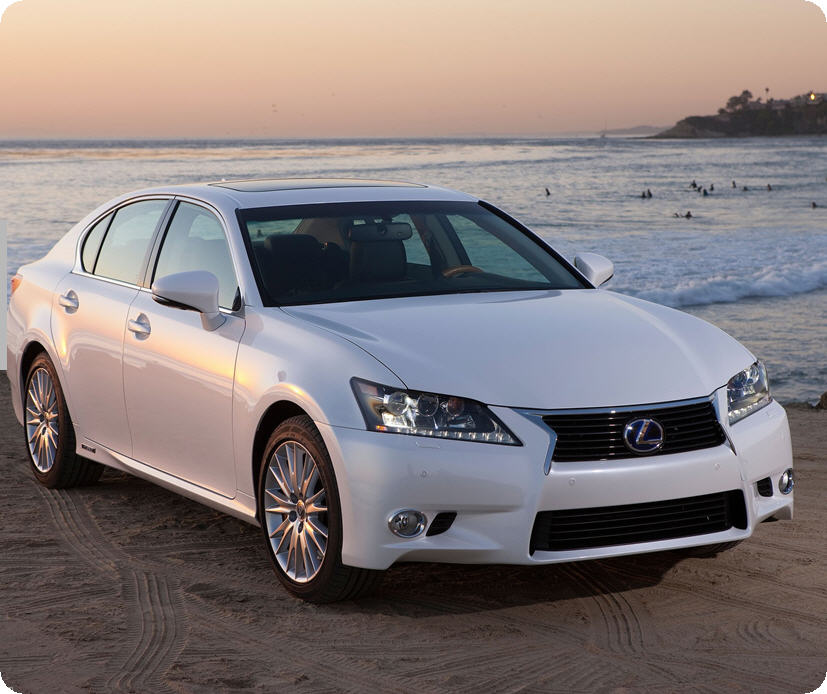
Lexus Model Takes Title as Market’s Greenest Car

An influential guide to low-pollution, fuel-sipping cars by the Automobile Club of Southern California has a new favorite: the Lexus GS 450h.

The $62,000 sedan is something of a souped-up, luxurious cousin to the Toyota Prius.

“What Lexus has done over the years is to take a little different tack,” said Steve Mazor, manager of the Automotive Research Center in Diamond Bar, where cars were tested for emissions and fuel efficiency. “The idea is to get a car that really performs like a sports sedan and really gets better fuel economy than other sports sedans … but very, very clean tailpipe emissions at the same time.”

The winner on a no-less-significant list for best value is the Nissan Versa, a no-frills, strictly gasoline-propelled sedan.

“It’s a $14,000 car that does everything pretty well, including its mileage,” Mazor said.

The automobile club’s 2012 Green Car Guide makes considerable concessions to American priorities and tastes.

Fuel economy and emissions certifications are weighed alongside comfort and handling, with vehicles put through their performance paces at the Auto Club Speedway in Fontana.

The guide — posted online this month and distributed via AAA affiliates in 19 states — does not incorporate the current suite of state incentives and federal tax credits for plug-in and other zero-emission vehicles, which can reduce the initial purchase costs by as much as $10,000, along with HOV-lane privileges and potential savings on a car charger at home. (Not everyone can recoup the federal credit, its authors reasoned, and California incentives stop at the state line.)

Read more at: http://www.thesandiegouniontribune.com/news/2012/sep/20/tp-lexus-model-takes-title-as-markets-greenest-car/

Disclaimer: for information and entertainment purposes only

Drive 55 mph and Save Gas

Some of us remember the maximum speed on the freeway being 55 mph.  In 1995 the speed limit was increased to 65 mph on the freeway.   In 1995 a gallon of gas was $1.26 but now at over $4.00/gallon we may have to return to our old ways; some us already have and don’t notice much difference except for the occasional middle finger from those who have to go around us. 

Consumer reports states: This is the biggest factor. You may have to be a little patient, but driving at 55 mph instead of 65 or 75 will save you money. When we increased the Camry’s highway cruising speed from 55 mph to 65, the car’s fuel economy dropped from 40 mpg to 35. Speeding up to 75 mph cost the car another 5 mpg. One reason is that aerodynamic drag increases exponentially the faster you drive; it simply takes more fuel to power the car through the air.

Read more gas saving tips at: http://www.consumerreports.org/cro/cars/tires-auto-parts/car-maintenance/fuel-economy-save-money-on-gas/overview/index.htm