
Tag Archives: residential

Want Solar but Can’t Afford-Leasing May be a Good Option

solar

I’d like to buy a solar electric system but am not sure I can afford to purchase one. Is leasing a system a better option?

I hear this question a lot. Solar electric systems have never been more affordable than they are right now, thanks to record-low module costs, generous federal tax incentives and financial incentives offered by many local utilities. Even so, out-of-pocket costs for a system that would meet the needs of a family of four for at least 30 years could run as much as $15,000 to $25,000 — or even more, depending on available incentives and the household’s annual energy consumption. Not surprisingly, a price tag like that creates sticker shock in a lot of potential customers.

Will a leased system affect the value of my home?  Contact the appraisers at www.scappraisals.com for your home value questions.  What happens if you want to sell your home?


Don’t despair! For those who can’t afford the upfront cost of a solar electric system, one option is to secure a loan so that you can make monthly payments. In some cases, this option can result in payments lower than your current monthly electric bill. And, as you suggested, solar leases can be another good option.


You could potentially lease a solar electric system from any third party, but it would typically be from a company that specializes in solar leases. Two such companies are SunRun and SolarCity, but you’ll want to search online to find what’s available in your area.


In general, two types of solar leases are available. The most common is an operating lease. In this case, the third party (the lessor) installs the system at its expense and is therefore considered the owner of the system. It receives all the tax benefits, such as the current 30 percent federal investment tax credit, and local utility rebates, if any. The terms of lease agreements vary considerably and are often tailored to the finances of the homeowner or business owner (the lessee). Some operating leases require no upfront payment, while others require a small down payment. The cost of maintenance and component replacement may fall on the shoulders of either the lessor or the lessee.

Read more: http://www.motherearthnews.com/renewable-energy/leasing-solar-panels-zb0z11zblon.aspx#ixzz2ZJj7NUcW

Disclaimer: for information and entertainment purposes only
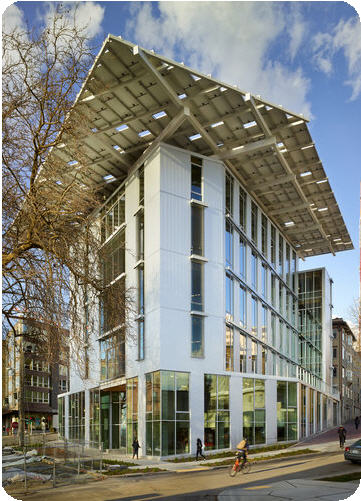
Making Energy Efficiency Attractive for Owners of Older Seattle Buildings

Energy Efficient Buildings

For commercial building owners, energy-efficiency improvements have had modest appeal

Switching to less power-hungry light bulbs is relatively easy, and the payoff relatively swift. But replacing furnaces or boilers or reconfiguring the building’s shell involves sinking millions of dollars into an asset that the owner may want to get rid of long before the investment has paid off.

Will energy efficiency add value to your home?  Contact the appraisers at www.scappraisals.com for your value questions; they specialize in energy efficient and residential green properties.

In a new twist, some investors, a technology company, a municipal utility and an environmentally oriented foundation have joined forces to show that major energy-efficiency improvements in commercial buildings may provide alluring new revenue to all involved.

A program at the Bullitt Foundation’s new building in Seattle is aimed at attracting the notice of commercial building owners around the country who may be reluctant to make heavy investments in such technologies. Under this plan, if they, or investors, put in the capital for major efficiency retrofits, new revenue, based on precise measurements of energy savings, will keep coming in for decades.

Currently, building owners, utilities and utility regulators who underwrite some efficiency measures remain somewhat skeptical of what are called “deep retrofits,” like swapping out furnaces, boilers or the building shell itself. This has been particularly true for older, smaller commercial buildings, which, according to a new report, account for 47 percent of all commercial real estate outside the world of malls.

Read more at: http://www.nytimes.com/2013/06/19/realestate/commercial/making-energy-efficiency-attractive-for-owners-of-older-seattle-buildings.html?ref=realestate

Property Spotlight – Home Built in 1912 Gets LEED Platinum Rating

leed

When architect Isabelle Duvivier of Duvivier Architects bought a dilapidated 100-year-old home in the neighborhood of her dreams, she kept the 950-square-foot floor plan but gave it a modern, environmentally friendly update that won a LEED platinum rating as well as the U.S. Green Building Council’s 2012 Outstanding Home Award. Rather than demolish the 1912 house, Duvivier remodeled. “I wanted to preserve as much of the original house as I could,” she said. A new second-story master bedroom is set back from the street to respect the scale of the Venice, Calif., neighborhood. Duvivier planted a vegetable garden in the front yard, as well as fruit trees and grapes along the alley.

“I’m a green architect through and through,” she said. “I wanted to go for high LEED (Leadership in Energy and Environmental Design) points, but my main goal was to demonstrate that a big component of green building is not building from scratch, but with what is there.”

Have a green property that needs appraising?  Contact the appraisers at: www.scappraisals.com; the forerunners in green property appraisals.

Duvivier’s goal was “to reduce the footprint/impact of our house on the planet through water, energy and material efficiency.” To improve energy performance, the house has carefully placed windows, solar tubes and skylights. High-efficiency appliances and 95 percent LED lighting result in a home that is 53 percent more efficient than California standards. A 4-kilowatt solar array produces more electricity than the house uses 10 months out of the year.

Read more at: http://www.chicagotribune.com/classified/realestate/home/sc-home-0401-duvivie-20130406,0,7000731.story