
Category Archives: energy savings

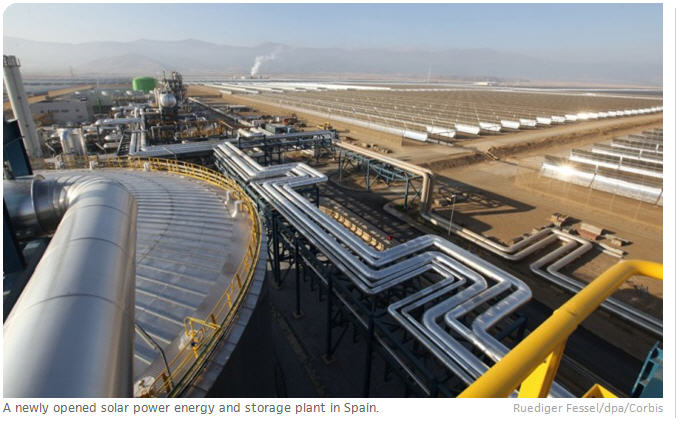
Are We On the Cusp of A Solar Energy Boom?

plant

The total solar energy hitting Earth each year is equivalent to 12.2 trillion watt-hours. That’s over 20,000 times more than the total energy all of humanity consumes each year.

And yet photovoltaic solar panels, the instruments that convert solar radiation into electricity, produce only 0.7 percent of the energy the world uses.

Does solar add value to your home?  Contact the appraisers at www.scappraisals.com for your value questions.

So what gives?

For one, cost: The U.S. Department of Energy estimates an average cost of $156.90 per megawatt-hour for solar, while conventional coal costs an average of $99.60 per MW/h, nuclear costs an average of $112.70 per MW/h, and various forms of natural gas cost between $65.50 and $132 per MW/h. So from an economic standpoint, solar is still uncompetitive.

And from a technical standpoint, solar is still tough to store. “A major conundrum with solar panels has always been how to keep the lights on when the sun isn’t shining,” says Christoph Steitz and Stephen Jewkes at Reuters.

But thanks to huge advances, solar’s cost and technology problems are increasingly closer to being solved.

Read more at: http://theweek.com/article/index/244437/are-we-on-the-cusp-of-a-solar-energy-boom

Disclaimer: for information and entertainment purposes only.

Natural Cooling Strategies

cooling

Most people have limited tolerance for hot weather. As the thermostat rises, we quickly become uncomfortable, and if it becomes too hot inside our homes, it’s even dangerous. Our modern response to this problem is simple: “Turn up the air!” However, air conditioning consumes a lot of electricity, and most of it comes from polluting fossil fuels. Electricity is also a limited resource: On the hottest days of the year, some cities don’t have enough electricity to meet demand, leading to brownouts or rolling blackouts.

Contact the appraisers at www.scappraisals.com to determine if saving energy add value to your home.


Fortunately, many old-fashioned design strategies can keep a house cool naturally, which conserves energy and saves money. Although home builders largely have stopped using these techniques over the past 100 years, there’s no reason we can’t rediscover them and use them in our homes. This article explains how to use a few basic natural cooling strategies, whether you’re building a new house or making improvements to an existing home.


Natural Ventilation


Before society embraced air conditioning, we all found simple ways to beat the heat. One was to sit on a shaded porch, sipping a cold drink. If the porch was positioned correctly, gentle breezes would blow past. Breezes help moisture evaporate from your skin — one of the body’s main methods for cooling off. In fact, many natural cooling techniques boil down to one basic principle: Keep the air moving. So how do you improve airflow within your home?

Read more: http://www.motherearthnews.com/renewable-energy/natural-cooling-zm0z11zphe.aspx?newsletter=1&utm_content=05.24.13+GEGH&utm_campaign=2013+GEGH&utm_source=iPost&utm_medium=email#ixzz2UK3uVy3I

Disclaimer: for information and entertainment purposes only.
The 100-MPG Car You Can Build!!!

car

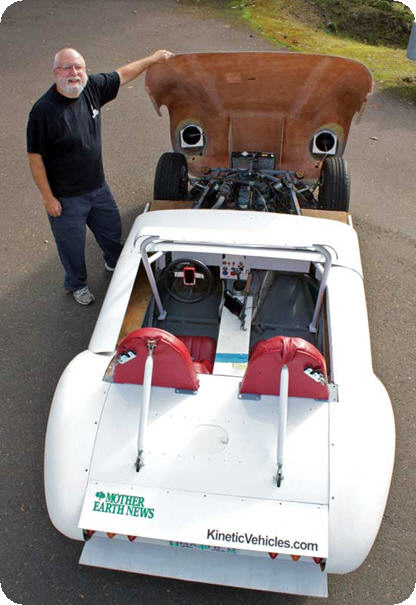
What started in the summer of 2008 as an ambitious project to create a do-it-yourself, 100 miles-per-gallon sports car within a budget of $10,000 has come full circle. MAX (Mother’s Automotive eXperiment) now has more than 100,000 miles in its logbook and consistently achieves 100 mpg at speeds from 45 to 55 mph.

The project proves triple-digit fuel efficiency is feasible — even on a tight budget, and especially if you build your own car. If I can make a 100-mpg car in my Oregon garage, what could the major automakers be giving us?

That said, it’s important to understand upfront that MAX is not comparable to a modern sedan, with all of the creature comforts most drivers expect. But it doesn’t need to be.

MAX is marvelously practical as a second car, or as a primary car for those who rarely need more space than a two-seater provides. You can use MAX to get groceries or go to work. It won’t replace the minivan when you need to get your kid’s soccer team to practice, but you likely don’t need a minivan for most of your drives.

Read more: http://www.motherearthnews.com/green-transportation/build-your-own-car-zm0z13amzmar.aspx#ixzz2TeewGx4R

Disclaimer: for information and entertainment purposes only