Category Archives: Green Homes Spotlight

Property Spotlight – Green GOOD Design Winner 2011

green house

They mean green

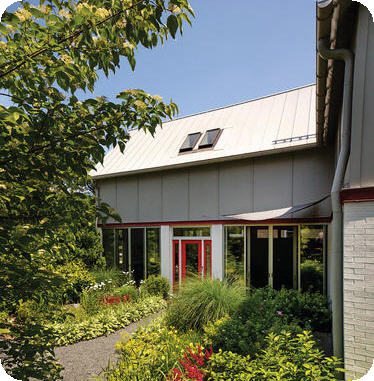
Here’s how the Krones home embraces green design principles:

Optimizing use of the sun: Scott designed the home to incorporate passive and active solar strategies. Two courtyards are edged in Moduline sliding glass doors and floor-to-ceiling windows. They face south and west to capture light and heat, supplementing12 photovoltaic panels on the gabled garage roof that provide power to the house.

Make sure you get the value of your green upgrades in your next real estate appraisal; contact the appraisers at www.scappraisals.com.  They are the forerunners in green appraisals in Southern California.

Improving indoor air quality: Geothermal heating and cooling and an electronic air filter that removes allergens and pollutants provides economical environmental control; the garage is 37 feet away from the house to eliminate exhaust fumes; and the Krones used low-VOC materials throughout the house.

Using the land responsibly: “We choose a compact corner lot by East Wilmette standards, which is close to public transportation, schools, services and the beach,” says Scott. Scott maximized the home’s footprint with vaulted ceilings that drop to five feet on the edges of the second floor and soar to 23 feet in the center. “Village zoning doesn’t count any space lower than seven feet, so we effectively increased the size of the house by 20 percent,” he estimates. He also optimized the site by setting the long side of the house’s T-shape facing the house next door, fenestrating it with clerestory windows for privacy.

Creating a high-performance and moisture-resistant house: The house is built with engineered lumber, steel, common brick and fiber cement board, and the roof is standing seam aluminum — all materials that contribute to the strength, water resistance and reflectivity of the house. Coupled with high-density foam insulation and the heating and cooling system, “the house costs us very little in monthly expenses and is easy to maintain,” says Scott.

Wisely using the Earth’s natural resources: “We’ve very careful about what we bring into the house and how much we own,” says Sharon. “We’ve chosen our furnishings very carefully to last for a lifetime.”

Read entire article: http://www.chicagotribune.com/classified/realestate/home/ct-mag-0811-greener-gestures,0,3857817.story

Disclaimer: for information and entertainment purposes only

Honda Smart Home at UC Davis

Sustainable Honda Smart Home

Sustainable and high-tech, Honda Smart Home US will be a showcase for environmental innovation, demonstrating Honda’s vision for zero-carbon living and personal mobility. A vision of a lifestyle of renewable energy for home and transportation, HSH will feature new technologies to greatly reduce the amount of energy consumed by individual households, including the use of solar power to charge a Honda Fit EV battery electric vehicle.

Located on the campus of the University of California, Davis, HSH will use less than half the energy for heating, cooling and lighting than a similarly sized home in the area. In fact, HSH is designed to produce more energy than it consumes, while allowing its residents to remotely monitor and adjust all aspects of energy use in real time.

Does going green add value to your home in San Diego?  Contact the appraisers at www.scappraisals.com for your residential real estate appraisal questions.

For the better part of three decades, we have been working to advance our environmental technology—not just for our vehicles, but also the energy production and distribution systems that are just as important for the long term. With a low CO2 footprint, state-of-the-art energy management and the direct photovoltaic (PV)-to-car charging system, HSH is a working example of this research.

Read more at: http://corporate.honda.com/smarthome/

Builders and Consumer Perceive Green Home as Affordable to Live in – Expensive to Build?

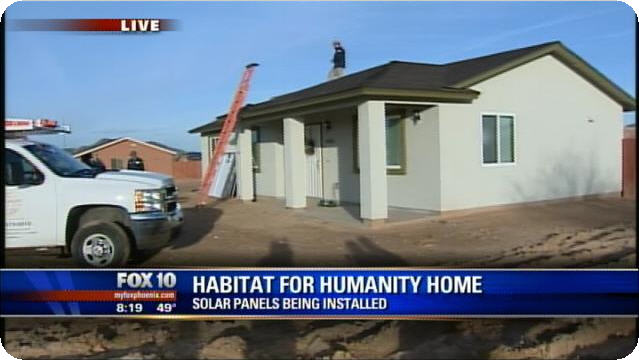
habitat

New Survey From Whirlpool Corporation and Habitat for Humanity International Also Find Consumers Believe Savings may be Worth the Expense

Green homes offer a wide variety of benefits from reducing carbon footprints to saving money on utility bills to even improving the health of children. However, a recent Whirlpool Corporation and Habitat for Humanity survey conducted by the NAHB Research Center (a subsidiary of the National Association of Home Builders), polled home builders, as well as consumers, and found many believe there’s a disconnect between living in a green home and purchasing one. Yet, the majority of respondents (64 percent) indicated that savings from green home features were sometimes worth the added costs and efforts. This finding was consistent across all income level groups for both renters and homeowners.

Does energy efficiency add value to your home?  Contact the appraisers at www.scappraisals.com for your value questions.

It’s a particularly difficult position for the majority of homeowners in the United States. The consumer survey, fielded in August 2010 by the NAHB Research Center to gauge perceptions of affordable and green housing, found that the majority of High (67 percent), Upper Middle (65 percent), and Middle (59 percent) income respondents, as well as nearly half of low income respondents (48 percent), indicated they believe a completely green home would be affordable to live in or maintain. Yet only high-income respondents were more likely to indicate that a completely green home would be affordable to purchase (71percent).

“The health benefits, low utility costs and other factors make green homes ideal for all homeowners. However, it takes a united front of manufacturers, builders and organizations to help builders and consumers understand that building green can be affordable,” said Tom Halford, general manager, contract sales and marketing, Whirlpool Corporation. “There’s a need to bridge the perception gap between green-building and affordability, so that builders and families understand that options exist to improve their footprint in the long-term, while saving money and resources in the short-term.”

The builder survey, fielded July-August 2010 to members of the Research Center’s Online Builder Panel, found that 87 percent believe green homes are affordable for middle income families to live in, while 30 percent felt green homes were too expensive for the segment to purchase or build. For low-income families, 70 percent of home builders believe green homes are affordable to live in, and nearly 60 percent of builders thought green homes were too expensive for low-income families to purchase or build.

Read more at: http://oikos.com/news/2010/12.html#affordable

Disclaimer: for information and entertainment purposes only.