
Category Archives: Real Estate

A Tool Kit for Home Buyers to Help Avoid Potential Pitfalls

So you’re house shopping and you’ve fallen hard for a sweet little gem that seems, well, perfect. The photos are lovely, the walk-through revealed a number of amenities you’ve been seeking, the location is ideal.

This is it, right?

Not necessarily. A house — even a brand-new one — comes with a history and literally thousands of diverse components, some of which could be defective and cost big bucks to fix. A buyer’s ability to diagnose potential problems during a short visit? Limited at best.

Does the appraiser inspect for health and safety?  Contact the appraisers at www.scappraisals.com for your appraisal questions.

As a result, shopping for a home, like any potential relationship, can include elements of uncertainty, surprise and trepidation.

“I’m super paranoid,” says Jacob Moschler, a Hyattsville resident who’s been gradually moving toward homeownership with his wife, Thuan Do, but is nervous about choosing a home that winds up having a host of problems. “That’s one of the reasons we haven’t bought a house yet.”

A buyer, though, doesn’t have to jump wholly unaware into the unknown. There are a number of ways to gain information about the property — both its physical condition as well as its past — before buying.

There are several tools and sources to help you feel a little more secure before signing on that dotted line. Some are mandated by law, while others simply require a little extra legwork.

Read more: http://www.washingtonpost.com/realestate/a-tool-kit-for-home-buyers-to-help-avoid-potential-pitfalls/2012/11/08/fdda5b98-22c3-11e2-8448-81b1ce7d6978_story.html?hpid=z9

Disclaimer: for information and entertainment purposes only
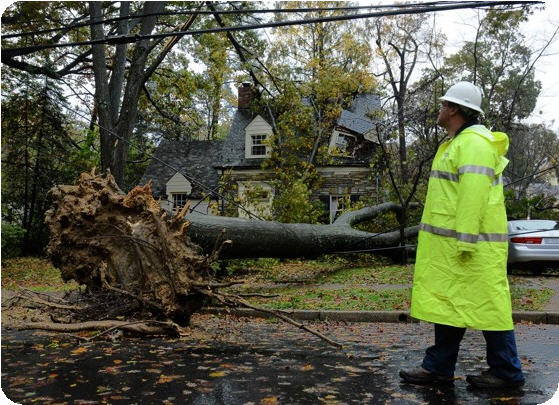
Who’s Responsible When A Tree Falls?

In an unwelcome repeat of last summer’s scenario following the derecho, many Washington area homeowners are dealing with the aftermath of fallen trees caused by winds from Hurricane Sandy that swept across the Eastern Seaboard this week.

If you were spared from this situation last summer, you might assume that your neighbor would be responsible for assuming the costs of his tree that fell on your property.

But that may not be the case.

The general rule is that unless the neighbor knew or should have known that his tree was unsafe, he is not responsible even if it hurt you or your family member or damaged your property. Our courts follow the old common law: It’s your property, so take care of it, unless you can prove your neighbor was negligent.

Read more at: http://www.washingtonpost.com/realestate/whos-responsible-when-a-tree-falls/2012/11/02/feece3d6-21c7-11e2-8448-81b1ce7d6978_story.html

Disclaimer: for information and entertainment purposes only
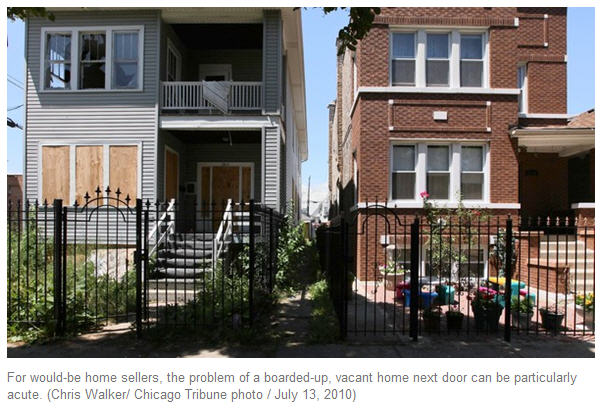
The Eyesore next door: What You Can Do

With millions of homes in foreclosure — and millions more owners having difficulty paying their mortgages — there’s likely to be one in every neighborhood: the property that has gone to seed.

Maybe the green lawn next door that you once envied has turned an ugly brown because it hasn’t been watered, or the flower beds have been overtaken by weeds that have grown up to the windows. Or perhaps the grass hasn’t been cut in weeks and the house is surrounded by what looks like a wheat field.

Will foreclosures effect the value of your home?  Contact the appraisers at www.scappraisals.com for your value questions

If the neighborhood eyesore has been abandoned, the house has probably deteriorated. The windows may be broken or boarded up, the gutters could be sagging, the garage door might be hanging off its frame and the roof could be covered with debris.

Perhaps the place has been taken over by rodents. Or maybe the neighborhood kids are using it as a hangout. Or homeless squatters could be using it as shelter — or drug pushers might be using it as their place of business.

It’s not a pretty picture. Yet scenes like these are playing out everywhere. No neighborhood is immune, and the effect on local property values can be chilling, even when the distressed property is occupied and well-maintained.

Research from the Federal Reserve Bank of Cleveland shows neighboring property values sag by as much as 3.9 percent when a nearby house is in the foreclosure process but is occupied. When the offending house is vacant and the taxes aren’t being paid, the negative effect on neighboring property values can be twice that much.

“Vacant homes can be more than just an eyesore. They can have substantial negative impacts on the surrounding community, impacts that are felt most acutely by the neighbors and communities that must cope with the dangers and costs of vacant buildings,” Federal Reserve Board governor Elizabeth Duke said in a recent speech in New York.

Read more at:  http://www.chicagotribune.com/classified/realestate/foreclosure/sc-cons-1101-vacant-homes-20121101,0,1022917.story

Disclaimer: for information and entertainment purposes only