
Category Archives: Renewables and Energy

How to Choose the Best Solar-Energy Equipment

solar

Installing a home solar energy system is a smart financial investment for many homeowners. As you evaluate offers from solar companies, there are many different factors to consider – the equipment that you choose for your system, your financing options, and the installer that you select all have an impact on your solar savings. This guide will help you evaluate the different solar panels and inverters available so that you can find the best equipment for your home.

Will this be cost-effect or add value to your home?  Contact the appraisers at www.scappraisals.com they are the only appraisal company in Southern California that specialize in solar and green properties.

What is the Best Solar Panel for You?

You can evaluate solar panels on a few main parameters: production, durability and manufacturer quality.

The amount of electricity a given solar panel can produce will produce is dependent on several factors, including the power rating, power tolerance, efficiency and temperature coefficient. Taken together, these factors will tell you how much power your panel will be able to produce.

You’ll also want to look at indicators of panel manufacturer quality. Start with the warranties and assurances that the manufacturer offers on their equipment. Like all things, solar panels degrade and become less efficient over time. Many manufacturers will guarantee that the power production of their panels doesn’t fall below a certain threshold over twenty-five years. In addition, many panel manufacturers have a materials warranty in case the panels simply fail.

Most solar panels are very durable, but if you live in an area that has heavy snow or high wind, you should also be sure that the panels you install are designed to withstand the conditions in your area. Look for panels that meet the IEC 61215, a reliability standard established by the International Electrotechnical Commission (IEC). IEC 61215 uses an accelerated outdoor stress test for panels to ensure their durability.

When you evaluate panels on production, durability and manufacturer quality you’ll find they break down into categories. EnergySage’s ranking system, which takes all of these factors into account, sorts panels into three groups: premium, standard, and economy.

While some homeowners may choose to invest in the highest quality, most efficient “premium” panels, remember that those will come with a higher price tag. Going solar is a lot like buying a car: not everyone needs a Porsche! Conversely, if you want to save by buying cheap solar panels, your system may produce less electricity over its lifetime, reducing your overall savings. Only you know what is best for your home.

read more at: http://www.motherearthnews.com/blogs/renewable-energy.aspx

Disclaimer: for information and entertainment purposes only
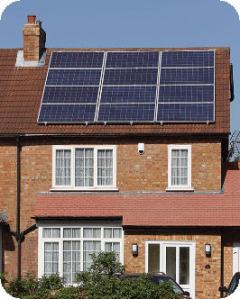
Solar-Energy Incentive Programs

In addition to the generous federal investment tax credit of 30%, there are over 900 financial and regulatory incentive programs for solar photovoltaic (PV) systems across the United States. While going solar is still a big decision with a pretty hefty price tag, it’s becoming more and more affordable, depending on where you live.

Considering solar and need to know if it adds value to your home?  Contact the appraisers at www.scappraisals.com for your solar value questions.

Federal Investment Tax Credit (ITC)

The solar investment tax credit (ITC) is a 30% federal tax credit for solar energy systems, both residential and commercial. Originally set to expire at the end of 2016, the tax credit has been extended and will remain at the 30% level through 2017, 2018 and 2019 and then be phased out completely over the following three years, falling to 26% in 2020, 22% in 2021 and to 10% in 2022.

There is no cap on the maximum amount of the credit. If the tax credit is more than your tax liability in the year you install the system, you can carry forward the excess amount and use it in the future. Allowable expenditures include equipment costs and labor costs for assembly, installation, preparation, and interconnection.

The tax credit applies to installations on both principal residences and second homes (even an RV or a boat can qualify as long as they are considered as a second home according to the rules of IRS).

Net Metering

Net metering is an example of a regulatory incentive for homeowners with grid-connected systems that allows you to buy electricity from the grid when you are not producing enough solar electricity and to sell your excess electricity to the grid for a credit.

In most states, you are credited for your excess electricity at the retail rate. However, recent policy changes in Nevada have resulted in a significant disincentive where solar electricity generators are only compensated for their extra electricity at the wholesale rate. After a considerable slow down in new solar system applications in that state, other jurisdictions are weighing the disadvantages of such a policy shift.

Local Incentives

Many states have put their money where their mouth is, by implementing incentive programs that truly make solar energy a better investment than sticking with the status quo (i.e. the local utility). These solar tax credits, rebates and other financial incentives can make the difference between a state/city being at grid parity or not, where grid parity is defined as the point at which solar electricity is the same or cheaper than electricity from the utility, calculated over the lifetime of the panels (on average 25 years). Now let’s take a look at three example states to better understand some of the main types of solar incentives available to homeowners.

read more at: http://www.motherearthnews.com/renewable-energy/solar-energy-incentive-programs-zbcz1606.aspx?newsletter=1&utm_source=Sailthru&utm_medium=email&utm_campaign=07.01.16%20MEN%20GEGH%20eNews&utm_term=GEGH%20eNews

Disclaimer: for information and entertainment purposes only

On the Fence about solar? SDG&E rates increasing this July hitting Residential Customers

solar roof

Last month, the California Public Utilities Commission (CPUC) approved and finalized the latest round of residential rate changes for all three investor-owned utilities. The rate changes are scheduled to become effective within the next month.

Is solar right for your home?  Contact the appraisers at www.scappraisals.com not only are they Certified Appraisers they are also Certified Building Analysts.

San Diego Gas and Electric residential customer base will see an average rate increase of 13 percent from $0.20 per kilowatt-hour to $0.233 per kilowatt-hour. All four tiers will see an increase, with the majority of increases coming in tiers one and two. The lowest electricity users will be the most affected.

When rates increase, the economics of going solar become more attractive. This applies to both existing solar customers and potential customers considering going solar. Given that tiers one and two are increasing the most on a percentage basis, low usage customers considering solar stand to benefit the most. Whereas the economics of going solar may not have made sense previously for low usage customers, solar may now provide a cheaper option that staying with the utility.

read more at: http://patch.com/california/lagunaniguel-danapoint/sdge-rates-increasing-this-july-hitting-residential-customers_c32ebfb5

disclaimer: for information and entertainment purposes only