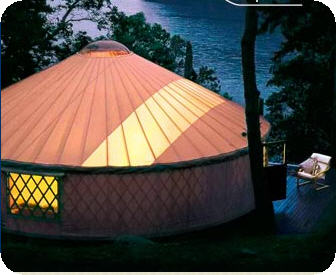
Unique, affordable, environmentally friendly and easy to set up, a Pacific Yurt is an outstanding choice for a vast range of personal uses, including: Vacation Home or Cabin, Temporary Housing, Guest Lodging, Studio / Office, Spa Enclosure, and Meditation/Fitness Room
What is a Yurts?
The Pacific Yurt is a modern adaptation of the ancient shelter used by Central Asian nomads for centuries. The compact shape of the yurt and combination of lightweight members in tension and compression mean that the structure is highly efficient in maximizing strength while minimizing the use of materials.
The Pacific Yurt is a lightweight, low-cost, state-of-the-art version that retains the sense of wholeness of the ancient form while delivering the structural integrity, longevity and low maintenance demanded by modern users.
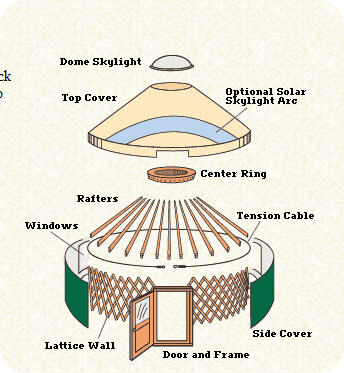
Though generally classified as a tent, the yurt is much stronger and weathertight. The Pacific Yurt is a circular structure that consists of a durable fabric cover, tension band and a wood frame that includes a lattice wall, radial rafters, central compression ring and a framed door.
For more information go to: http://www.yurts.com/



 Green Real Estate Appraiser