San Diego: Free water survey program

water city

Free residential survey programs are available to property owners and tenants located within the City of San Diego Public Utilities Department’s service area. If you receive your water bill from a different agency, please check with that agency for its available resources and survey programs.

This City-wide program is offering free-of-charge single-family and multifamily (up to eight units) water surveys to water customers who pay their water bills to the City of San Diego. As part of this program, a Water Conservation Representative will tour your property to identify leaks and water-saving opportunities.

Participants can receive water-saving equipment and information, including low-flow showerheads, faucet aerators and other free items. The Representative will also evaluate your landscape and irrigation systems. Since this program emphasizes customer education, it is important the tenant/occupant be present at the time of the survey.

get more info: https://www.sandiego.gov/water/conservation/surveyprogram

White House Announces Clean Energy Savings for all Americans

President Obama is committed to ensuring that every American family can choose to go solar and to cut their energy bills – and that every American community has the tools they need to tackle local air pollution and global climate change.

Since President Obama took office, solar electricity generation has increased 30 fold and solar jobs are growing 12 times faster than the rest of the economy. Last year, we announced a set of actions to increase access to solar and create a more inclusive workforce, but there is still more work to do. That is why, today, the Obama Administration is announcing a new cross government partnership – the Clean Energy Savings For All Initiative – between the Departments of Energy (DOE), Housing and Urban Development (HUD), Agriculture (USDA), Health and Human Services (HHS), Veteran’s Affairs (VA), and the Environmental Protection Agency (EPA) to increase access to solar energy and promote energy efficiency across the United States and, in particular in low- and moderate- income communities.

Through the Clean Energy Savings for All Initiative, the Administration will work to ensure that every household has options to choose to go solar and put in place additional measures to promote energy efficiency. To continue along this track, the Administration, in collaboration with state agencies, is announcing a new catalytic goal to bring 1 gigawatt (GW) of solar to low- and moderate- income families by 2020. This goal is a 10 fold increase and an expansion of the initial target President Obama set in his Climate Action Plan to install 100 MW of renewable energy on federally-assisted affordable housing by 2020.  The Clean Energy Savings for All Initiative will help achieve the goal by promoting innovative financing mechanisms, bolstering technical assistance for states and communities, driving innovation, scaling up workforce training to make sure low- and moderate-income Americans can take advantage of the jobs that come with a transition to clean energy, convening stakeholders, and working with the private and philanthropic sectors.

read more at: https://www.whitehouse.gov/the-press-office/2016/07/19/fact-sheet-obama-administration-announces-clean-energy-savings-all

 

Smart Technology for your home

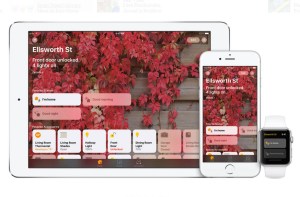
apple home

A Guide to Smart Home Devices

Most of the smart home devices I tried were pretty simple to use. But the more I piled on the network, the glitchier things got. Suggestion: Stick with as few brands as possible or resign yourself to using some apps in lieu of voice control.

Apple HomeKit

All HomeKit-certified products use Apple hardware and software, which makes for an easier setup and a more reliable connection; adding a Lutron outlet to control a light is nearly as easy as adding a Bluetooth device. But as usual, Siri occasionally misunderstood me, attempting a phone call when I was trying to adjust the thermostat. And when I moved beyond Wi-Fi range, I couldn’t use voice control at all, because I don’t have a third-generation or later Apple TV to relay the commands. (A software update this fall promises to address the problem by allowing an iPad to serve the same function.)

Amazon Echo

Alexa, the Amazon Echo’s voice-control assistant, mixes control of your smart-home devices with other personal assistant tasks, like calling Uber or checking your credit card balance, which might be problematic if Alexa weren’t such a good listener — often much better than Siri. But it’s not portable like your phone, so you’ll need a $30 Bluetooth voice remote (like I used) or a $90 Echo Dot (a mini version of Echo) if you leave the room where Echo is installed. And Alexa can sometimes be maddeningly picky, understanding what you’re saying but asking you to rephrase it anyway.

read more at: http://www.nytimes.com/2016/07/10/realestate/smart-doesnt-always-mean-an-easy-home.html?ref=realestate&_r=0