
Natural Cooling Methods – Keep Cool without AC

Water will cool you off even faster than air. Direct contact with cold water not only provides instant relief through evaporative cooling, but also has lingering effects that can help get you through the last couple of hours before sunset. Wear a dampened kerchief around your neck. Take cold showers and drink plenty of water. If your garden needs a drink, set the sprinkler to overshoot a little and send the kids (or yourself) out to cool off.

Mechanical evaporative coolers — units that transfer heat from air to water to create a cool breeze — are highly effective in regions with hot, dry summers. You can also achieve this type of cooling via lower-tech methods, such as hanging a wet sheet over an open window or door to catch the breeze coming through, or situating a fan to blow air across salted ice or frozen water bottles.

Cool nighttime air can often be used to cool a home. This works really well in hot, desert climates, but also humid climates early and late in the cooling season. So, before you turn your thermostat down to cool your home, be sure to check outside temperature. If it’s below 75oF – and it often is early and late in the cooling season in many locations – open windows and let the cool nighttime air cool your home.

To accelerate the cooling, a whole house fan can be switched on. Or, you can place a couple box fans in windows to draw cool air into your home. Fans use a lot less energy than air conditioners.

Opening windows in upper stories also helps draw hot air out of a home, accelerating the influx of cool air from lower windows.

Next morning, shut the windows to prevent daytime heat gain. You may want to draw curtains to reduce heat gain during the day, especially if you are gone during daylight hours at work or at school.

read more at: http://www.motherearthnews.com/renewable-energy/energy-efficiency/natural-cooling-methods-zm0z15aszsor.aspx
Solar Project creates bargain electricity

(Bloomberg) — Warren Buffett’s Nevada utility has lined up what may be the cheapest electricity in the U.S., and it’s from a solar farm.

Berkshire Hathaway Inc.’s NV Energy agreed to pay 3.87 cents a kilowatt-hour for power from a 100-megawatt project that First Solar Inc. is developing, according to a filing with regulators.

That’s a bargain. Last year the utility was paying 13.77 cents a kilowatt-hour for renewable energy. The rapid decline is a sign that solar energy is becoming a mainstream technology with fewer perceived risks. It’s also related to the 70 percent plunge in the price of panels since 2010, and the fact that the project will be built in Nevada, the third-sunniest state.

“That’s probably the cheapest PPA I’ve ever seen in the U.S.,” Kit Konolige, a utility analyst at Bloomberg Intelligence in New York, said Tuesday. “It helps a lot that they’re in the Southwest when there’s good sun.”

The power-purchase agreement for energy from First Solar’s Playa Solar 2 project was the cheapest offered to NV Energy this year for new power plants. The utility also agreed to pay 4.6 cents a kilowatt-hour for power from SunPower Corp.’s 100- megawatt Boulder Solar project, the best price offered last year.

Both 20-year, fixed-rate contracts were submitted to Nevada’s Public Utilities Commission for approval July 1.

“When compared to existing solar contracts and to other fossil-driven generation,” the rates are “very reasonable,” the utility said in the filing.

‘Cost Competitive’

“Power generated from solar plants is cost-competitive with power from traditional, fossil fuel burning plants, and becoming more cost-competitive every day,” SunPower Chief Executive Officer Tom Werner said in an e-mailed statement.

read more at: http://washpost.bloomberg.com/Story?docId=1376-NR4NRS6VDKHV01-3AI1OMG6T032019DHS56DDRTOE

San Diego County Fountains used 800k gallons of water in 5 months

fountain

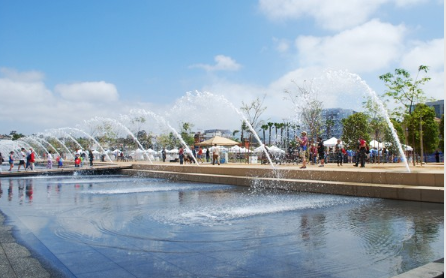
Despite an emphasis on their use of recirculating water, the fountains at the county’s new waterfront park in downtown San Diego splashed through more than 800,000 gallons of tap water during the first five months of this year, according to county figures.

The fountains outside the county administration building are part of a $50 million park that opened in May 2014. Thirty-one jets spray 14-foot arcs of water into a shallow basin, where children can play and cool off.

The fountains recirculate city tap water stored in underground tanks, but they lose more than 100,000 gallons each month to evaporation, filtration and treatment, according to county records obtained by The San Diego Union-Tribune under the California Public Records Act.

read more at: http://www.sandiegouniontribune.com/news/2015/jun/26/800k-water-feature/