
Low-Wattage Lifestyle; Giving Up Power

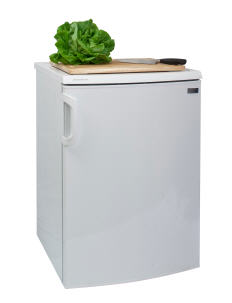
Battery Powered Refridge/Freeze

Here’s a simple truth about electrical power: If you don’t have it, you won’t use it. Most Americans never grapple with this. Queue up “Revolution” on the 60-inch plasma, punch the remote, and cheap, abundant power flows out of the wall.

If your home had almost a zero utility bill every month do you think there is value in that?  Contact the appraisers at http://www.scappraisals.com for your energy efficient values.

“A typical home draws about 30 kilowatt-hours a day,” Mr. Crea said, whereas a typical off-the-grid house may try to get by on 4 to 10 kilowatt-hours. Yet even for people devoted to sustainable living, he added, “the idea is always to find larger or greater amounts of power to sustain the kinds of living that people are accustomed to.”

For Friday at the energy fair, Mr. Crea said, “what I’ve done in my talk is to look at it from the other end”: how much power does a person need (that is, really need) to experience a good quality of life?

Mr. Crea’s four-bedroom, three-and-a-half-bath home sits on 57 acres at the top of a hill. That’s a lot of house for a single guy. “I think it’s pretty,” he said. “Other people say it looks like the Bates Motel.”

Yet the house’s photovoltaic panel is just 2 by 3 feet: about a third the size of the front door. On a sunny day, it produces half a kilowatt-hour, enough to power a well pump, a TV, a microwave and the stereo.

Being a tinkerer, though, Mr. Crea decided to wire the tiny amp inside a set of computer speakers to drive his full-size hi-fi speakers. Now he plays music off four AA rechargeable batteries. (“Home Depot, off the shelf,” he said.)

It’s usually the refrigerator that really guzzles the juice: perhaps a kilowatt-hour a day, he said. But companies like Sun Frost and SunDanzer manufacture tiny, highly insulated boxes that run on perhaps a quarter or an eighth of the usual power.

“The majority of Americans would turn their heads when they see these things,” Mr. Crea said. Still, “you can put your beer and your lunch meat in there.”

Read More at: http://www.nytimes.com/2013/06/20/garden/solar-power-to-the-people.html?pagewanted=3&_r=0&ref=realestate

Disclaimer: for information and entertainment purposes only

Solar Energy for People Who Can’t Afford It

Make your own heating for your home

Make your own heating for your home

Jason Edens started experimenting with a solar-powered furnace because he didn’t have any money and he didn’t want to be cold. He is happy to explain how “solar thermal” technology works. It’s what he does as the founding director of the Rural Renewable Energy Alliance, which manufactures and installs solar energy systems across nine states.

First, here is what a solar-powered furnace isn’t: the familiar shiny photovoltaic panels that rest on the roof, generating electricity year-round. Instead, “essentially it is an aluminum-and-glass box,” said Mr. Edens, 41. Inside one of these solar thermal systems “is what I like to call a sun sponge or the absorber, the part that inverts the irradiance of the sun into useful heat.”

Will a solar powered furnace add value to your home in San Diego?  Contact the appraisers at www.scappraisals.com for your value questions.

Still can’t picture it? Try this: A solar-powered furnace is a slab of coated metal and a fan. The technology, which was patented way back in 1881, Mr. Edens said, operates when the sun shines.

But let’s get back to that cold winter a dozen years ago in Pine River, Minn. Mr. Edens, then a graduate student in environmental policy, was so poor that he ran out of propane to heat his 1,250-square-foot home.

read more at: http://www.nytimes.com/2013/06/20/garden/solar-power-to-the-people.html?pagewanted=2&_r=0&ref=realestate

Disclaimer: for information and entertainment purposes only
Making Energy Efficiency Attractive for Owners of Older Seattle Buildings

Energy Efficient Buildings

For commercial building owners, energy-efficiency improvements have had modest appeal

Switching to less power-hungry light bulbs is relatively easy, and the payoff relatively swift. But replacing furnaces or boilers or reconfiguring the building’s shell involves sinking millions of dollars into an asset that the owner may want to get rid of long before the investment has paid off.

Will energy efficiency add value to your home?  Contact the appraisers at www.scappraisals.com for your value questions; they specialize in energy efficient and residential green properties.

In a new twist, some investors, a technology company, a municipal utility and an environmentally oriented foundation have joined forces to show that major energy-efficiency improvements in commercial buildings may provide alluring new revenue to all involved.

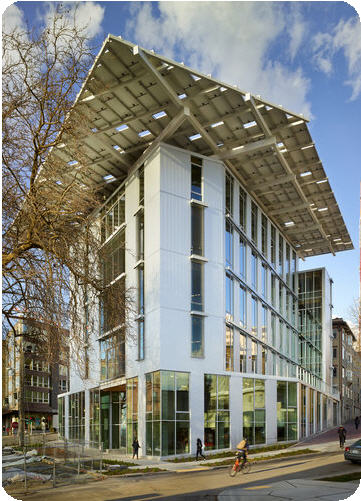
A program at the Bullitt Foundation’s new building in Seattle is aimed at attracting the notice of commercial building owners around the country who may be reluctant to make heavy investments in such technologies. Under this plan, if they, or investors, put in the capital for major efficiency retrofits, new revenue, based on precise measurements of energy savings, will keep coming in for decades.

Currently, building owners, utilities and utility regulators who underwrite some efficiency measures remain somewhat skeptical of what are called “deep retrofits,” like swapping out furnaces, boilers or the building shell itself. This has been particularly true for older, smaller commercial buildings, which, according to a new report, account for 47 percent of all commercial real estate outside the world of malls.

Read more at: http://www.nytimes.com/2013/06/19/realestate/commercial/making-energy-efficiency-attractive-for-owners-of-older-seattle-buildings.html?ref=realestate