
What is a Strategic Mortgage Default?

A strategic default is the decision by a borrower to stop making payments (i.e., to default) on a debt despite having the financial ability to make the payments.

Order an appraisal from the appraisers at www.scappraisals.com to determine the value of your property before starting negotiations.  Remember the bank will hire their own “experts” to use in the negotiation; why not have your own ammo.

This is particularly associated with residential and commercial mortgages, in which case it usually occurs after a substantial drop in the house’s price such that the debt owed is (considerably) greater than the value of the property — the property has negative equity or is underwater — and is expected to remain so for the foreseeable future, such as following the bursting of a real estate bubble.

A short sale negotiator makes a case for default from the UT Newspaper.

Jacalyn Blank, a Clairemont-based short sale negotiator, wrote this guest post for the U-T San Diego in response to last week’s story about an anti-strategic default website started by a local real estate agent. Blank, who works with strategic defaulters, makes the case for what’s now a more widely accepted practice. We featured Blank in a business Q&A last fall: Meet a San Diego short sale negotiator.

Myth: Strategic defaulters are bringing down home values and impeding a housing recovery.

Truth: Strategic defaulters are not selling their house for a discount. They are selling it for what it is worth in today’s market. A “normal” sale is still selling for less than the house was valued at 6 to 8 years ago, even though it is a “normal” sale. This isn’t because of short sales or even foreclosures. All distressed property sales are a symptom of the real problem: Homeowners owe too much on inflated mortgages they obtained in an unsustainable housing high. The attachment to an inflated value comes from the name “housing crisis,” when really what we have is a “mortgage crisis.”

Read more at: http://www.utsandiego.com/news/2012/mar/19/are-strategic-defaults-right-or-wrong/

Disclaimer: for information and entertainment purposes only

California is Top in Green Jobs in Nation

“Green” jobs accounted for 2.4 percent of the nation’s total employment in 2010, the Labor Department reported Thursday in its first-ever survey of green goods and services jobs.

According to the report, which gave a snapshot of the role that environmental consciousness plays in the U.S. economy, the United States had 3.1 million green jobs in 2010, the vast majority of them in the private sector. The public sector listed 860,000 green jobs, the report said.

In the past, employment in this field has been hard to measure because there’s been no consensus on what constitutes a green job. For its assessment, the Labor Department counted certain jobs in manufacturing, construction, utility and other sectors in which the primary function was to contribute to a green product or service. That includes the manufacture of hybrid vehicles, the production of solar power and construction projects such as weatherization.

read more: http://www.washingtonpost.com/business/economy/labor-dept-green-jobs-account-for-24percent-of-employment-in-2010/2012/03/22/gIQAExURUS_story.html

disclaimer: for information and entertainment purposes only
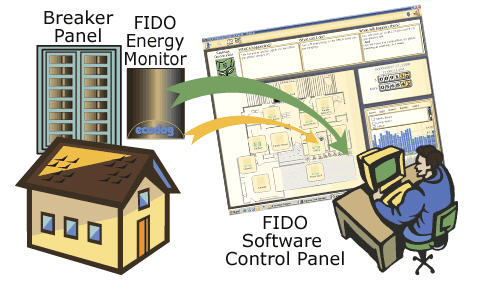
Monitoring System Helps Homeowner from Wasting Power – EcoDog

While working in the solar industry, Ron Pitt became frustrated by the obsessive focus on generating one more watt hour of energy. He saw the opportunity for a chunk of the market that everyone was ignoring — how to reduce energy usage.

That led him to found EcoDog — ecodoginc.com — to help homeowners save on electricity bills and reduce energy use without investing big sums of money or drastically changing their lives. FIDO is the home energy monitoring system he developed, bootstrapping the company in his garage.

Does energy efficiency add value to your home?  Contact the appraisers at www.scappraisals.com for your value questions.

Seed money from former SDG&E CEO Tom Page helped Pitt, 49, recruit nine colleagues, move into a San Diego office and launch FIDO in 2010.

He has more than 100 customers but is talking to investors and plans to scale up production this summer.

Read more at: http://www.utsandiego.com/news/2012/apr/02/tp-ecodog-has-energy-collar/

Disclaimer: for information and entertainment purposes only