
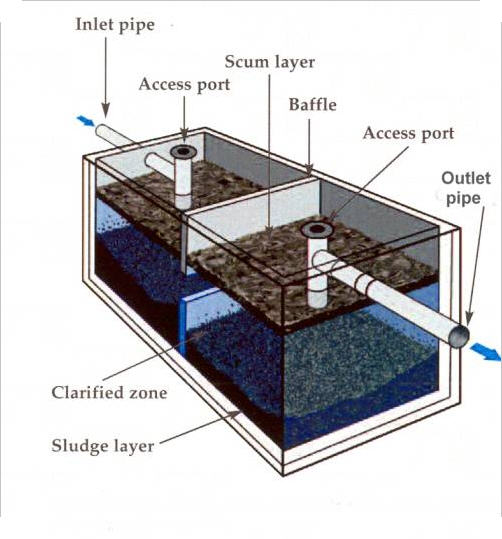
Going from Septic to Municipal Sewer System

Reprint from Holmes Magazine

Q: I’m looking to switch from a septic system to the municipal sewer system.  How much will this cost me, and what’s involved in the process?

A: When sanitary sewers are available, a homeowner on a private septic system has the option to connect to it, but there are several steps that must be taken.

First, approval must be obtained from the municipal authority that has jurisdiction over connections to the sewer, likely the public works department.  This fee is based on where the municipal sewer is located.  Next, you must get a building permit for the connection from the dwelling to the street.  Building permit and sewer connection fees vary across municipalities but the permit will likely cost about $100 to $150.  Then you must hire a contractor to install the piping.  Costs vary based on site conditions, depth of installation, and pipe materials, but expect an estimate around $10,000.  This overall budget should include the street connection fee as well.

Once the piping is installed, an inspection from the local municipality is required to ensure that the work meets the building code.  It’s the responsibility of the homeowner to make sure this is done before the piping is covered with backfill.

The existing septic tank must then be removed, filled with granular material or pumped by licensed waste hauler to prevent it from becoming a health and safety hazard and from contaminating the environment.

Disclaimer: for information and entertainment purposes only

New Windows Still Getting Window Condensation

Reprint from Holmes Magazine.

Q: Our living room’s bow-window always developed condensation and even ice on the inside pane in the winter.  My husband and I assumed it was because it was old, but even after replacing all of the windows in our 1,000 SF house, the problem is still continuing.  Our humidity level isn’t high – it’s generally around 35 percent.  What could be causing this?

A: As the season change, some homeowners might experience moisture forming on the inside of their windows.  Naturally, many think that there’s an issue with the window; but this is actually a sign that the window is doing its job to keep the warm air inside your home.  The condensation is a result of too-high humidity levels inside your home.  For example, in the winter the ideal humidity range is 20 percent  to 25 percent and , in the summer; the level should not exceed 50 percent.  Anything above these levels and condensation may occur, just as a “sweating” is the result of a glass surface that tends to have a lower temperature than most other surfaces in your home.

Ice forming on a bay or bow window can also be due to a lack of insulation under the seat board and above the head board.  Adding insulation, combined with opening your blinds and pulling back heavy curtains to let heat reach the inside pane of glass, should resolve your problem.  Also, lower your humidity and run dehumidifier to get your home into the ideal humidity range.

Disclaimer: for information and entertainment purposes only
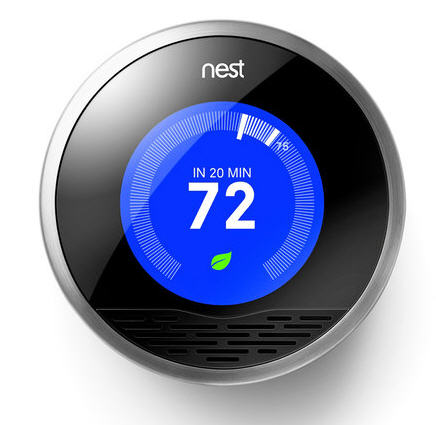
Keep Track of Your Thermostat Online

From the NYT:

A COUPLE of months ago, a Silicon Valley start-up invited me to review its new home thermostat. I wasn’t expecting much.

If you do go through all the trouble of setting up an ideal schedule, then when the weather or something else in your life changes (say, your cold-fearing relatives from Florida move in for a few weeks), the thermostat won’t adjust to your new circumstances. Then you have to program it all over again — or, more likely, forget about programming it and manually change the temperature a few times a day.

Over the last few weeks, though, I’ve become unreasonably excited over these devices. That’s because I’ve tested several new models that all offer much-needed improvements over the run-of-the-mill thermostats that most of us have on our walls.

Depending on the model, these new devices can accomplish several amazing feats. They connect to the Internet, which means they can be adjusted from afar, using the Web or your phone. The Internet connection also allows them to get information about your local weather and tailor their work accordingly.

Read entire article at: http://www.nytimes.com/2011/12/08/garden/home-thermostats-wallflowers-no-more.html?pagewanted=all

disclaimer: for information and entertainment purposes only