
Tag Archives: housing bubble

Is The Sellers Market Starting to Cool?

From Karen Starr, The Grubb Co.

Q: Is the red-hot seller’s market about to cool?


A: I don’t know about you, but I have begun to sense a change in the temperature of our local real estate market in the past few weeks. Maybe it’s because schools are almost out for the summer and parents’ focus has shifted to the challenges inherent in keeping our kids entertained for the next few months. Maybe it’s due to the “battle fatigue” that both buyers and their agents are experiencing as they have repeatedly put forth efforts of heroic proportion in their attempts to secure the home they desire.


Up until early May, new listings that were well-located, well-presented and well-priced were selling literally in days, with an avalanche of offers and at sales prices often exceeding asking prices by 20 to 40 percent.

Have questions about the value of your home?  Contact the appraisers at www.scappraisals.com


As we moved full swing into the spring market, inventory increased significantly, at least in the East Bay where I work and we now often seen fewer offers presented on new listings, with some homes even “languishing” for several weeks on the market prior to receiving an offer. Imagine that! I remember when 3 to 6 months was the “normal” marketing period for a new listing.


We are in a market transition of some sort here. Whether it is due to impending summer, buyer fatigue or increased inventory remains to be seen. Maybe it’s all of the above?


In the coming months we will most likely see asking prices more accurately reflect the actual current market value of the house rather than be priced in anticipation of the overbidding that was prevalent earlier.


Prices/values are not dropping; yesterday’s sales are the comparables used to establish current market value. Buyer demand remains high. The number of offers per listing may be fewer but houses will sell at closer to their asking price making it easier for buyers to gage where they must go, price-wise, in order to prevail.

Read more: http://www.sfgate.com/realestate/article/Sound-Off-Is-the-seller-s-market-starting-to-4587886.php#ixzz2Vk6egHjL

Disclaimer: for information and entertainment purposes only
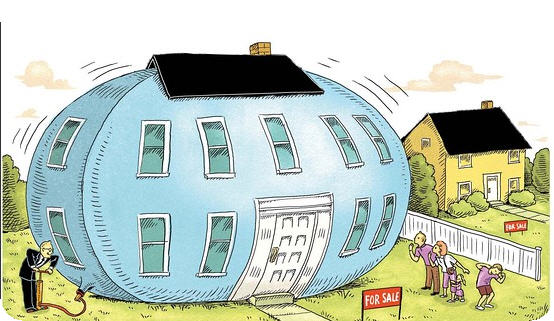
New Housing Bubble? Corporate Buyers Boosting Prices

bubbleDouble-digit home-price gains from San Francisco to Detroit to Miami have some aspiring home buyers racing back into the market.

But buyers, beware.

The housing market may not be as strong as you think.

Contact the appraisers at www.scappraisals.com for your home value questions.

Sure it’s tempting to want to lock in a low interest rate and take advantage of lower home prices before they rise further.

But it may make sense to take a breather before you buy a home and wait for prices to drop, as institutional investors might be inflating home prices.

Namely, Wall Street investors are scooping up homes in bulk, and there’s considerable concern this is inflating prices in certain areas of the country—and pricing individuals out of the market in general.

These institutional investors have been spending billions of dollars buying up single-family homes en masse. In 2012, institutional buyers purchased about 138,540 of both distressed and non-distressed homes in the U.S., or about 3% of all sales, according to RealtyTrac. It estimates institutional buyers purchased 32,355 homes in the U.S. in the first quarter of this year, or about

Read more at: http://online.wsj.com/article/SB10001424127887324299104578531132265680630.html?KEYWORDS=House+Sales

Disclaimer: for information and entertainment purposes

Is the Fed Blowing a New Housing Bubble?

Over the past year, the Federal Reserve has ramped up its policy of quantitative easing, with the result being new stock market highs and surging bond prices. Moreover, housing prices jumped 8%, the biggest annual gain since 2006.

The result is that more than a trillion dollars have been added to the market value of single-family homes. Homeowners are now wealthier and according to what economists call the “wealth effect,” they should be willing to spend more, helping the economy.

Live in San Diego?  Contact the appraisers at www.scappraisals.com for SD market questions.

But there is another, less sanguine view of the housing recovery. Recent data released by the Federal Housing Finance Agency (FHFA) suggest that the increase in house prices is not being driven by a broad-based improvement in the economy’s fundamentals. Instead, the Fed’s lower rates are simply being capitalized into higher home prices. This does not bode well for the future.

A comparison of FHFA’s conventional home-financing data for February 2012 and February 2013 shows that borrowers bought newly built and existing homes in 2013 for 9% and 15% more respectively than in the previous year. Increases of this magnitude cannot be attributed to higher incomes, as these rose a mere 2% over the last year, just keeping up with inflation. It appears that home prices are being levitated by quantitative easing. Because interest rates were .625% and .90% lower on new and existing homes respectively this year compared with last year, the monthly finance cost to purchase a new home remained the same and went up only 3% for an existing home.

While a housing recovery of sorts has developed, it is by no means a normal one. The government continues to go to extraordinary lengths to prop up sales by guaranteeing nearly 90% of new mortgage debt, financing half of all home purchase mortgages to buyers with zero equity at closing, driving mortgage interest rates to the lowest level in 100 years, and turning the Fed into the world’s largest buyer of new mortgage debt.

Read more at: http://www.aei.org/article/is-the-fed-blowing-a-new-housing-bubble/

Disclaimer: for information and entertainment purposes only