
Tag Archives: real estate appraisal

Navigate the New Rules of Real Estate

The Housing Horizon
One thing is certain, says Jed Kolko, chief economist and head of analytics for real estate site Trulia.com: “The rebound is real.” After U.S. home prices hit rock bottom in the first quarter of 2012 (plummeting nearly 30 percent since early 2008), they rose over the next nine months, according to the Case-Shiller home price index. The National Association of Realtors recently reported that the median existing home price in February was $173,600, up 11.6 percent from a year ago. And fewer listings are languishing, which means buyers are making choices faster. The median time it took to sell a house in January was 108 days, down from 119 days in January 2012, per realtor.com.

“When any housing recession recovers, it goes like gangbusters,” says real estate mogul Barbara Corcoran. “But this is the fastest comeback I’ve seen.”

Have values rebounded in Southern California?  Contact the appraisers at www.scappraisals.com for your value questions.

Celia Chen, a housing analyst with Moody’s Analytics, expects to see continued growth for the next few years. If you’re ready to buy a home, this is a good time to do it, she says. But in today’s post-bubble market, how should we define “ready”?

“Home ownership makes sense only if you can buy toward the future you want for yourself and your family,” says Ilyce Glink, head of the financial website ThinkGlink.com and author of Buy, Close, Move In! “You shouldn’t buy a one-bedroom condo if you want to have kids in the next five years. If you’re looking to retire but the thought of monthly payments keeps you up at night, you’re far better off skipping the mortgage—even if interest rates are at 3 percent. And whoever you are, you should plan to be there for a minimum of 10 years.”That means staying not just in your home but also in the town and region. Think about the area schools and amenities, and how they’ll align with your needs over the next decade. Consider the stability of your current job, as well as your career prospects if your company were to close or lay off employees. In today’s job market, many workers find themselves having to relocate for new opportunities. In that scenario, a home—especially one that’s underwater or tough to sell—could become a millstone. During the Great Recession, the number of long-distance moves sank to record lows in part because many job seekers were trapped in a frozen housing market.

Read more at: http://www.parade.com/4295/katerockwood/navigate-the-new-rules-of-real-estate/

Disclaimer: for information and entertainment purposes only
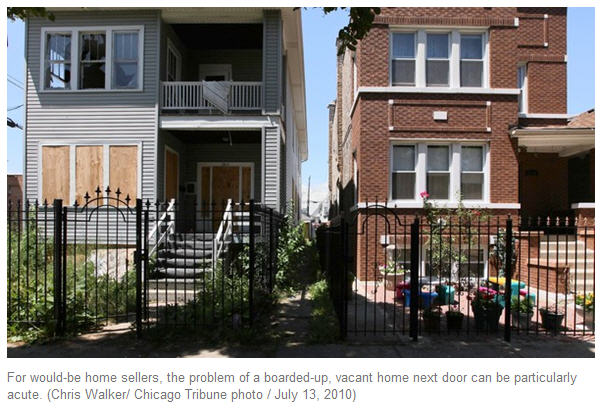

The Eyesore next door: What You Can Do

With millions of homes in foreclosure — and millions more owners having difficulty paying their mortgages — there’s likely to be one in every neighborhood: the property that has gone to seed.

Maybe the green lawn next door that you once envied has turned an ugly brown because it hasn’t been watered, or the flower beds have been overtaken by weeds that have grown up to the windows. Or perhaps the grass hasn’t been cut in weeks and the house is surrounded by what looks like a wheat field.

Will foreclosures effect the value of your home?  Contact the appraisers at www.scappraisals.com for your value questions

If the neighborhood eyesore has been abandoned, the house has probably deteriorated. The windows may be broken or boarded up, the gutters could be sagging, the garage door might be hanging off its frame and the roof could be covered with debris.

Perhaps the place has been taken over by rodents. Or maybe the neighborhood kids are using it as a hangout. Or homeless squatters could be using it as shelter — or drug pushers might be using it as their place of business.

It’s not a pretty picture. Yet scenes like these are playing out everywhere. No neighborhood is immune, and the effect on local property values can be chilling, even when the distressed property is occupied and well-maintained.

Research from the Federal Reserve Bank of Cleveland shows neighboring property values sag by as much as 3.9 percent when a nearby house is in the foreclosure process but is occupied. When the offending house is vacant and the taxes aren’t being paid, the negative effect on neighboring property values can be twice that much.

“Vacant homes can be more than just an eyesore. They can have substantial negative impacts on the surrounding community, impacts that are felt most acutely by the neighbors and communities that must cope with the dangers and costs of vacant buildings,” Federal Reserve Board governor Elizabeth Duke said in a recent speech in New York.

Read more at:  http://www.chicagotribune.com/classified/realestate/foreclosure/sc-cons-1101-vacant-homes-20121101,0,1022917.story

Disclaimer: for information and entertainment purposes only

What Buyers Need to Know About a Home Inspection

: When buying a home, is there anything in the home inspection that the seller must fix before the completion of the sale?

How does the seller know the contents of the inspection

A: That’s a very good question. First, when you sign a contract to buy a house (whether it’s an existing or a newly built home), it should contain a home inspection contingency. A contingency gives you the right to cancel the sales contract and get your earnest money refunded if a particular condition is not met.

Will the home inspection effect the value?  Contact the appraisers at www.scappraisals.com

There are, from my experience, two kinds of home inspections contingencies: (1) if the home inspector finds problems, regardless of what they are, you have the absolute right to back out from the sales contract; or (2) if the inspector finds problems, you present those to the seller and give him X number of days to correct or give you a cash credit. If the seller refuses, you can then decide whether to go forward with the purchase or walk away.

Personally, I like the first option; it gives the buyer a “cooling off” period. All too often, real estate contracts are entered into late at night when the buyer is both on an emotional high but at the same time emotionally drained.

Regardless, however, do not let anyone convince you not to have a home inspection. I have represented too many buyers who failed to get their house inspected only to find major (or minor) problems that could have been corrected before closing.

A good real estate agent should provide you with the names of at least two home inspectors.

You want to make sure that the inspector you use will be independent and not a mouthpiece for the real estate service that gives him the business.

read more at:http://www.chicagotribune.com/classified/realestate/ct-mre-1104-benny-kass-20121101,0,6248870.column

Disclaimer: for information and entertainment purposes only