
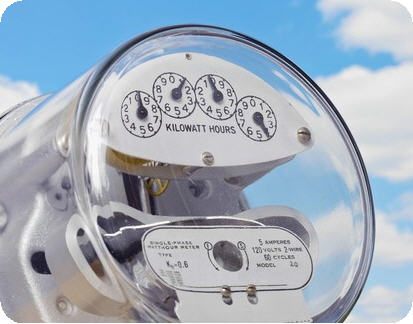
 There are two common reactions to the sticker shock of staggering utility bills:
Some people want to reduce the kilowatt hours and gallons of oil to help the environment.
Many want to reduce consumption to help the family budget. But where does it make sense to cut back or invest in energy-saving improvements? The way to find out is an energy audit.
Will an energy audit affect the value of your home? Contact the appraisers at www.scappraisals.com for your value questions.
Live in San Diego/California? The CCSE will give rebates to qualifying homeowners for a HERS rating. Learn more at: http://energycenter.org/index.php/incentive-programs/energy-upgrade-california/hers-ii-rebates
It pinpoints areas where energy is wasted and where improvements will generate the greatest return — maybe upgrading insulation or installing a new furnace. If your old furnace is only 60 percent efficient, for example, spending thousands for a new one that runs at 90 percent will pay off quickly, and then save money for years after. Make the same investment to go from 80 to 90 percent and it might take 30 years to recoup. But most choices are not that clear-cut.
The complicated decisions are clarified after an energy audit that looks at the entire home — appliances, windows, insulation, the works. It can be conducted by a specialized contractor or by most local utility companies. Some utilities offer them free or at a nominal cost.
Contractors typically charge $300 to $500.
Pros use sophisticated equipment to check efficiencies — smoke pencils to trace air leaks, blower doors to calculate pressures in the house and duct system, infrared cameras to find gaps in insulation. But there is another option: Do it yourself. At energystar.gov, a page on home energy audits has links to resources, including available tax credits, appliance rebates, and an interactive program zeroed in on your ZIP code that helps sort through fuel use and other issues. You may not need their help for obvious clunkers like an ancient water heater. And if you’re not up for crunching energy-saving numbers, stick to the basics and the two main areas to evaluate: air leakage and insulation value.
Air leaks: Inside, look for them at gaps along baseboards, around windows and doors, fireplace dampers, access hatches to the attic and electrical cover plates — all openings that pierce the barrier between inside and outside. On windows, for instance, see if there is enough play in the sash for you to rattle them. If there’s room for that, there’s room for air leaks. For a more conclusive test, close all exterior doors, windows and fireplace flues. Turn off all combustion appliances. Then turn on all exhaust fans, or run a large window fan to suck air out of the room. This pulls outside air inside, increasing the rate of air leaks so they are easier to detect. You can feel them by wetting your finger so that draft feels cool, or use smoke. Amazon has smoke-pencil kits for $35, but you can use a makeshift version with a piece of smoldering paper, or even a candle. That makes it easier to trace the airflow and see exactly where the leak is — maybe where a line of caulking will solve the problem.
Read more at: http://www.chicagotribune.com/classified/realestate/home/sc-home-0527-energy-audit-20130608,0,4236687.story
Disclaimer: for information and entertainment purposes only


 Green Real Estate Appraiser