
Tag Archives: san diego

What Buyers Need to Know About a Home Inspection

: When buying a home, is there anything in the home inspection that the seller must fix before the completion of the sale?

How does the seller know the contents of the inspection

A: That’s a very good question. First, when you sign a contract to buy a house (whether it’s an existing or a newly built home), it should contain a home inspection contingency. A contingency gives you the right to cancel the sales contract and get your earnest money refunded if a particular condition is not met.

Will the home inspection effect the value?  Contact the appraisers at www.scappraisals.com

There are, from my experience, two kinds of home inspections contingencies: (1) if the home inspector finds problems, regardless of what they are, you have the absolute right to back out from the sales contract; or (2) if the inspector finds problems, you present those to the seller and give him X number of days to correct or give you a cash credit. If the seller refuses, you can then decide whether to go forward with the purchase or walk away.

Personally, I like the first option; it gives the buyer a “cooling off” period. All too often, real estate contracts are entered into late at night when the buyer is both on an emotional high but at the same time emotionally drained.

Regardless, however, do not let anyone convince you not to have a home inspection. I have represented too many buyers who failed to get their house inspected only to find major (or minor) problems that could have been corrected before closing.

A good real estate agent should provide you with the names of at least two home inspectors.

You want to make sure that the inspector you use will be independent and not a mouthpiece for the real estate service that gives him the business.

read more at:http://www.chicagotribune.com/classified/realestate/ct-mre-1104-benny-kass-20121101,0,6248870.column

Disclaimer: for information and entertainment purposes only
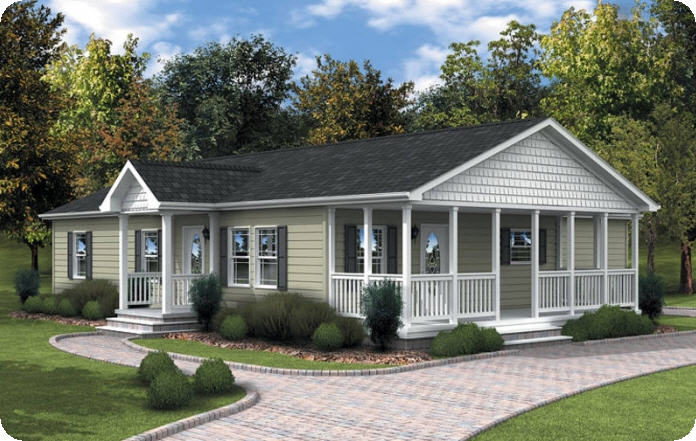
Prefab Homes Promise Efficiency, Cost Savings

Most are still built on-site, as opposed to being prefabricated and trucked in. That doesn’t make sense, says Sheri Koones, author of four books on prefab housing, including the new “Prefabulous and Almost Off the Grid: Your Path to Building an Energy-Efficient Home” (Abrams).

“Would you want your car to be built in your driveway?” says Koones, of Greenwich, Conn. “Of course you wouldn’t. You want your car made in a climate-controlled factory by skilled professionals on an assembly line. Wouldn’t you want the same thing for your home?”

Have a question about a prefab homes; contact the green appraisers at www.scappraisals.com for your value questions.

Prefab housing, a concept that’s been around at least since Sears and other companies introduced mail-order kits in the early 1900s, generally refers to factory-built modular and panelized housing. They are built to the same code as traditionally built homes, with additional structural requirements to make sure they withstand being transported. Depending on the home’s size, multiple pieces (or modules) are delivered to a site and secured together onto the foundation in a matter of hours.

Prefab homes are typically 60 percent to 90 percent complete at the time of delivery but often require an additional two or three weeks for finishing touches.

By contrast, mobile homes, which carry much of the stigma against prefabricated housing, are built to a more lenient federal code, arrive on their own wheels, depreciate quickly and are not generally zoned for urban use.

Because modular prefab homes are indistinguishable from site-built homes, they have become increasingly popular, pushed by the growing interest in green building.

“Prefab homes are much more efficient and environmentally friendly. There is so much less waste in the manufacturing process. Any excess materials can be recycled into other homes or sent back to the manufacturer instead of ending up in a Dumpster,” Koones says. “Because the materials aren’t exposed to the elements, prefab houses avoid problems with mold, rot and bacteria… .”

She also cites worker health and safety as a benefit to building homes off-site. Still, some consumers remain unsure of what a green home built off-site would entail.

Greenfab, a Seattle company, recently used a newly built prefab home as a teaching tool. After producing the first platinum LEED-certified prefab home in Washington State, Greenfab opened the modern house to the public for three months. School groups, builders, buyers and nonprofit groups toured it.

“People in the neighborhood just saw a foundation in the morning, and came home to find a completed house,” says Johnny Hartsfield, founder and president of Greenfab. “Our main goal as a company is to educate the public on the benefits of green and prefab.”

He also lists cost as a reason to go prefab. Since the homes are pre-designed, he says, there are no architect fees, time delays or cost overruns.

“Site building is loud and stressful,” Hartsfield says. “We want to make building your home more exciting and fun — we don’t want you to hate it or get divorced over it.”

Prefab homes can be customized. Some companies offer environmental upgrades beyond standards such as low-VOC paint and efficient appliances.

“We can install the foundation for water collection and solar adaptability in our homes,” Hartsfield says. “Even if they don’t have the money to set up a full solar collection system, we can build their home with the infrastructure to do that down the line.”

Read more at: http://www.utsandiego.com/news/2012/oct/20/tp-prefab-homes-make-inroads-promise-efficiency/?print&page=all

Disclaimer: for information and entertainment purposes only
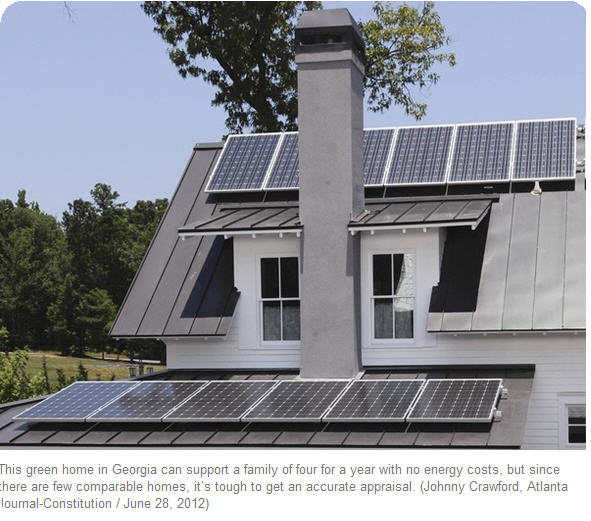
It’s Not Easy Getting Green Homes Appraised

Green home construction and remodeling is on the rise as a housing market recovery begins to take shape and consumers look to marry their quest for home comfort with energy efficiency and cost savings.

Putting a value on green properties continues to be a challenge because of a lack of comparable sales. However, some progress has been made on that front, say green building proponents.

Contact the appraisers at http://www.scappraisals.com they specialize in green, energy efficient and high value properties.

Last year, single-family green home construction represented 17 percent of the homebuilding market, in effect doubling since 2008, according to a report by McGraw-Hill Construction. Researchers predict that by 2016, green home construction could comprise 29 percent to 38 percent of the market, as builders devote more time to green projects. The share of remodeling projects labeled as green is expected to rise as well.

Who’s creating the trend and who’s following it? It’s tough to say.

Simultaneously, manufacturers are coming out with better products, builders and remodelers are looking to differentiate themselves in the marketplace, and homeowners are seeking healthier living spaces while keeping a lid on rising energy costs.

Read more at:http://www.chicagotribune.com/classified/realestate/ct-mre-1014-podmolik-homefront-20121011,0,5547471.column

Disclaimer: for information and entertainment purposes only