
Category Archives: Real Estate

Short Sale Pitfalls

As thousands of would-be buyers have discovered, short sales can be a long shot.

Though selling houses for less than the amount owed on the mortgage has become commonplace, accounting for the lion’s share of transactions in many markets, such sales are fraught with complications that can short-circuit the deal. There are no, uh, shortcuts.

Here, courtesy of members of the National Association of Exclusive Buyer Agents, is a short summary of the ways in which a short-sale purchase can be derailed:

Often the house is not advertised as a short sale. That’s like advertising a house that is not really for sale, because the seller does not have the authority to sell the house at the advertised price, says the Phoenix-based association, whose members work only on behalf of buyers.

The negotiating process is far different in that the seller may not care how much is being offered since he won’t be taking any money from the sale. The seller may be so anxious to get away from his underwater mortgage that he’ll accept just about any offer. But the bank has the final say.

Many lenders will not even discuss a short sale with a seller until a purchase contract is in place. That means the buyer who makes the first offer is a guinea pig, because nobody knows whether the lender will even accept a short-sale offer.

Short sales are sometimes listed at a “ridiculously low price” just to get the ball rolling, the association warns. Similarly, a seller may agree to any offer, no matter how low and no matter whether it has a snowball’s chance of being accepted by the bank, just so he can begin negotiations with the lender.

Read more at: http://www.chicagotribune.com/classified/realestate/foreclosure/sc-cons-1115-short-sales-20121115,0,7838703.story

Disclaimer: For information and entertainment purposes only
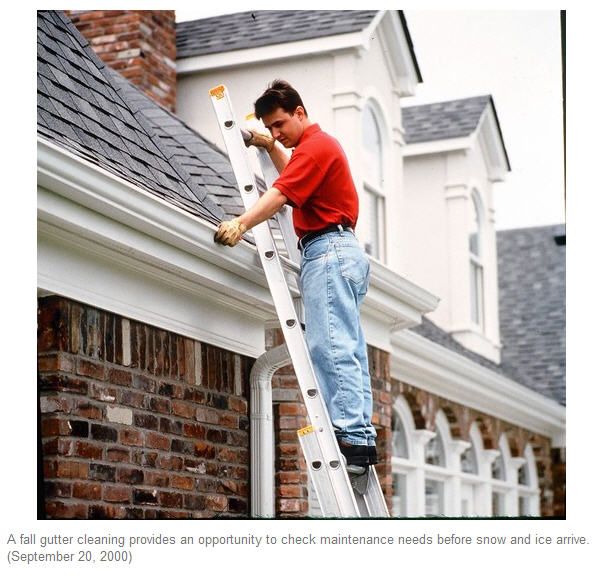
 

Winter – Home Chore Check List

Ready to hunker down for winter? Not so fast. Now’s the time to tackle a few chores that will help your house and yard ride out the cold season ahead. Here are a few to check off your to-do list.

Clean the gutters

Gutters and downspouts direct rainwater away from your house. That keeps water from pooling around the foundation and leaking into the basement, or freezing in the gutters at the roof line and causing damaging ice dams.

But those gutters and downspouts can’t do their job if they’re clogged with leaves and other debris.

After the trees have finished shedding their leaves, get up on a ladder and clean that stuff out. Plug the top of the downspout with a rag first to keep debris from going down the spout, and wear heavy gloves to protect your hands.

Reader’s Digest Association’s “1001 Do-It-Yourself Hints & Tips” recommends removing the debris with a plastic sand shovel or garden trowel, or you can fashion a scoop from a plastic milk jug. Dump the debris into a bucket instead of pushing it over the lip of the gutter to avoid dirtying the siding, the book suggests.

When the gutter is clean, run some water into it from a garden hose. Clear a clogged downspout with a plumber’s snake or a blast from the hose, working from the bottom up so you don’t compact the clog.

Read more at: http://www.chicagotribune.com/classified/realestate/home/sc-home-fall-chores-20121117,0,947494.story

Disclaimer: for information and entertainment purposes only

Is your Home Covered – Enough? Homeowners Insurance

Your home’s value may have dropped in recent years. But that doesn’t mean the cost to replace it has followed suit.

When you initially buy homeowners insurance, the insurer typically calculates the rebuilding cost of your home by taking into account factors such as the number of bedrooms and bathrooms, construction type and square footage of the home, says Wayne Salley, a Pittstown, N.J.-based risk-management consultant who helps individuals figure out how much insurance they need.

Some companies then automatically adjust your coverage as needed to keep it in line with a number of factors, including current rebuilding costs—which have been rising in recent years and include materials and labor—says Jeanne M. Salvatore, spokeswoman for the Insurance Information Institute, a nonprofit industry group.

But in other instances, you may need to contact the insurer about boosting your coverage. It’s a good idea to evaluate your coverage when your annual renewal notice arrives, says Ms. Salvatore.

Even if your insurer automatically adjusts your coverage, it isn’t taking into account any renovations or upgrades you have made that will be more expensive to replace, she says. So let the insurer know about changes.

If you’re especially worried about being underinsured in a disaster, you may want to consider an extended replacement cost policy, says Mr. Salley, which will cover replacement costs that exceed the policy maximum, up to a set percentage above the policy amount.

Read more at: http://online.wsj.com/article/SB10000872396390444734804578062300016106518.html

Disclaimer: for information and entertainment purposes only