
Category Archives: Uncategorized

Property Spotlight – Miller Ranch Porch House

Site Specific and Factory Sound: Lake | Flato joins the prefab party with an adaptable, modernist take on modular housing.

A couple of years ago, the team at Lake | Flato Architects got together to brainstorm ideas to help weather the recession. Even with a long list of design awards and a 2004 AIA Firm Award on their resume, the respected San Antonio-based practice was feeling the sting of the slowed-down economy. Associate partner Bill Aylor says the firm had long had a fascination with prefab, and living and working in Texas, where modular sheds and barns were common in the rural locations Lake | Flato often worked, it seemed a natural fit. “During our internal investigations we decided that if we did modular we wanted the designs to accomplish three things,” says Aylor. “We wanted to keep costs down, create a design that could have both prefab and site-specific elements combined without compromising design quality, and maintain a sustainable approach.”

Read more at: http://greensource.construction.com/green_building_projects/2012/1201-miller-ranch-porch-house.asp
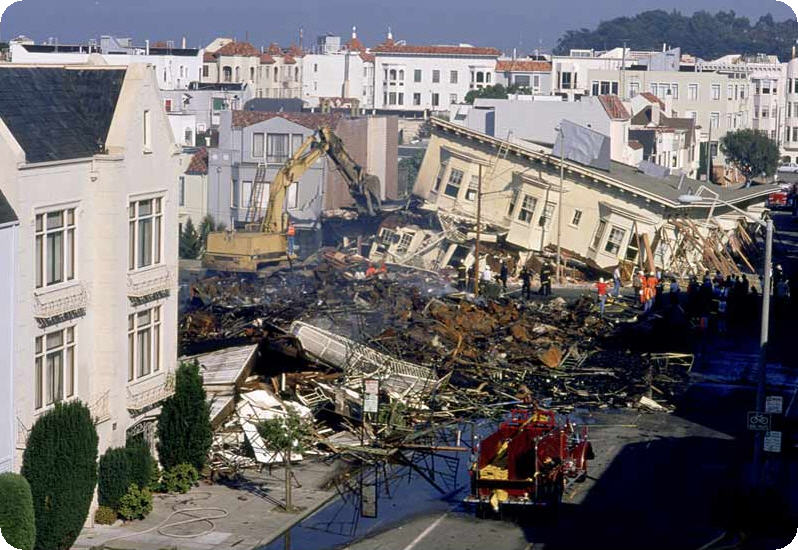
Earthquake Insurance – AAA Gives Advice

WESTWAYS: Why is earthquake insurance needed?
Glenn Pomeroy:
Most homeowners policies totally exclude damage caused by shaking from an earthquake. The only way to insure your house from earthquake damage is through a separate earthquake policy. The federal government may provide disaster assistance with low-interest loans and other types of assistance, but they won’t come in and rebuild homes after an earthquake.

WW: What is the insurer’s role?
GP:
 The CEA doesn’t have insurance agents or claims adjusters. Participating insurers handle all customer-service functions. To buy earthquake insurance, you call the company that insures your house and, if it’s a CEA member company, you can buy a CEA policy through it. If there were a major earthquake, your insurance company would send out its adjusters, who are trained to respond.

WW: Does the CEA policy cover everything that the homeowners policy covers?
GP:
No. The CEA policy is a typical catastrophe policy of basic coverage and a high deductible that’s designed to help your family recover and rebuild. It covers the replacement cost of your house as determined by the dwelling coverage limit in your homeowners policy and provides some limited coverage for the contents of your house. It does not cover property like swimming pools or fences. If it covered everything your homeowners policy covered, the premium would be much higher. The CEA program is intended to offer insurance that is as affordable as possible to help someone recover from a major event.

WW: Why don’t more people buy earthquake insurance?
GP:
Oftentimes people mistakenly think their homeowners policy provides coverage, or they think earthquake coverage is too expensive. But consider: What’s your major asset? It’s your home. So what’s the cost of not being protected? When an uninsured residence is destroyed, everything can be lost.

Read more: http://www.calif.aaa.com/westways/2012/01-02/Pages/standing-on-solid-ground.aspx?zip=92626

Disclaimer: for information and entertainment purposes only

Eating With the Seasons – Meat, Eggs; Save Money

 
Most of us know that fruits and vegetables are more abundant in some seasons than others, but not everyone realizes the same is true for meat and eggs. As a farmer, I think a lot about these seasonal cycles because getting supply to match demand is one of my biggest challenges. One of the best ways to even out the flow is to find customers who enjoy eating with the seasons—buying extra at some times and not demanding seasonal foods during hard-to-produce times. This often means preserving some for later use rather than eating an abundance of tomatoes or beef right now. When it happens, this synergism between season, farmer and patron is a dance that honors the natural ebb and flow of production. Cyclical menus stimulate an awe and respect for local food connections. And such conscious planning is good for pocketbooks—of both farmer and patron.

Seasonal Eating: Meat

Tremendous money and effort is expended maintaining production anti-seasonally, but meat is best in certain seasons, just as produce is. Forage-fattened beef is best in the fall. Once the frost has killed flies and sweetened the grass, cows are more comfortable than at any other time of the year. They naturally ramp up their forage intake in fall to get through the lean, hard winter. On the other hand, spring is when chickens lay lots of eggs, some of which become baby chicks. Seasonally speaking, it makes sense to eat chicken in the summer and beef in winter.

When buying meat from local farmers, you’ll find that eating the whole animal is a related issue. A chicken consists of much more than a boneless, skinless breast. The only way those can be offered in the supermarket is because the industry grinds and reconstitutes the rest into lunch meat and McNuggets, using low-wage labor and high volume to justify the sophisticated machinery. In the supermarket, boneless, skinless chicken breasts require an industrial approach to food preparation, but at home, it’s a different story. You can eat the breast, but also cook the rest of the chicken for casseroles, and freeze the broth for stock.

Read more: http://www.naturalhomeandgarden.com/eat-healthy/local-food/eating-with-the-seasons-zmoz12mazmel.aspx#ixzz1ngvujp4y