
San Diego: Housing Market Flashing the Caution Light

A time-tested signal of weakness in the housing market is flashing yellow.

When you compare the number of home sales (which are highly seasonal) with those from the same month a year earlier, this key measure has declined in San Diego County for nine consecutive months through June — with five at double-digit rates.

Statewide trends are similar, with 11 straight months of year-over-year sales declines, according to the latest figures from DataQuick, a company that tracks transactions reported to county governments.

“My sellers are in complete shock. We’re getting no calls, no inquiries. It’s like the market just went away,” said Kimberly Dotseth, a San Diego real estate broker. “Buyers think prices are too high.”

An exception is the lower-priced segment of the market, where homes listed for $400,000 or less are still receiving multiple offers and quick sales. This supports the view that high price might be a primary factor discouraging many sales, rather than other factors such as tough lending standards or too few homes on the market.

read more at: http://www.utsandiego.com/news/2014/aug/03/tp-housing-market-flashes-caution/

disclaimer: for information and entertainment purposes only
San Diego: Home Price Growth Slows

The pace of annual home price appreciation in San Diego County continued its dive in May, dropping by about 3 percent for the second consecutive month.

The S&P/Case-Shiller Index showed Tuesday that from May 2013 to May 2014, home prices in San Diego County rose 12.4 percent, down from 15.3 percent in April, and 18.7 percent in March. The slowdown is coming as the county’s housing market has not maintained the investor-led appreciation that quickened the home price recovery in 2013. Annual appreciation has been on the decline since peaking at 21.5 percent in August 2013.

David Blitzer, chair of the index committee at S&P Dow Jones Indices, said nationwide home prices are rising at their slowest pace since February 2013.

“Housing has been turning in mixed economic numbers in the last few months,” he said. “Prices and sales of existing homes have shown improvement while construction and sales of new homes continue to lag. At the same time, the broader economy and especially employment are showing larger improvements and substantial gains.”

The index, which lags two months, measures repeat sales of single family homes. From April to May, prices in the county rose 0.5 percent, second slowest on the 20-city index behind Phoenix’s 0.4 percent monthly gain.

Read more at:  http://www.utsandiego.com/news/2014/Jul/29/case-shiller-real-estate-may-appreciation-sales/

Disclaimer: for information and entertainment purposes only

Homes and Utility Companies – The Fight over the Grid

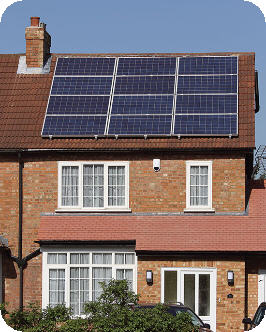
solar roof

“Distributed energy” refers to electricity generation from many small-scale (often renewable) sources tied into the grid to meet the power demand of local communities — such as solar arrays or small wind turbines powering individual houses. This network is contrary to the conventional energy setup of large, centralized power plants that transmit electricity up to hundreds of miles to consumers. As the price of solar power continues to plummet and more homeowners install renewable energy systems on their homesteads, locally produced, distributed energy is becoming a larger component of the electricity grid.

Now, some electric utilities are claiming the grid is becoming too messy — and they’re working to block home energy generation. The utilities say the grid is too fragile to handle the burden of distributed energy. But former U.S. Secretary of Energy Steven Chu calls the claims “another bullshit argument,” and says solar installations won’t threaten grid stability until they approach 20 percent of the customer base. No state has neared that proportion, but that’s not stopping utilities from lobbying to repeal renewable-energy tax credits and abolish net-metering agreements between utilities and grid-tied homeowners seeking to sell their excess power back to the utility. For example, Hawaiian Electric Co., which operates in one of the most highly solar-powered states, has adopted policies that effectively halt solar installations. The company cites safety concerns even though less than 5 percent of its customers use photovoltaics.

The grid isn’t as burdened as these utilities claim, and renewable-energy proponents theorize the utilities may be attacking distributed energy to protect their profits rather than the integrity of the grid. It’s up to you to tell your state government that you support legislation allowing distributed energy. To get the facts, read the Department of Energy study The Potential Benefits of Distributed Generation.

Read more: http://www.motherearthnews.com/renewable-energy/distributed-energy-zmgz14aszsto.aspx#ixzz38OrqxJt2

Disclaimer: for entertainment and information purposes only