Hurricane-Resistant House

hurricane

Weather forecasters expect 2013 to be an above average hurricane season, with up to 20 named storms predicted for the five-month season that began June 1. Up to 11 of those are projected to strengthen into hurricanes, six of them Category 3 or higher. An average season sees 12 tropical storms and six hurricanes. In 2012 there were 19 named storms, including Sandy, the second-costliest hurricane in U.S. history.


Shape: Its circular shape is aerodynamic, allowing winds to flow around the house and dramatically reducing the air pressure on the exterior walls. The low-pitched roof system is angled for optimum wind deflection and minimum drag, diminishing the risk of damage or collapse.


Engineering: The home’s exacting design incorporates engineering redundancies that work with nature not against it. Roof and floor trusses radiate from the center of the house, helping spread the force of high winds throughout the structure instead of allowing it to build up in one area. A building envelope, with air-tight construction at the key force intrusion areas of the roof, windows and doors, helps the structure remain intact.


Connections: In its design and engineering, Deltec focuses on three key potential points of failure due to high winds – roof to walls, walls to floor, and floor to foundation. To ensure connections are as tight as possible in those critical areas, the homes use truss hangers and connectors that are many times stronger than those required by building codes in hurricane-prone areas.


Material excellence: Deltec homes are framed with lumber that is more than twice as strong as traditional framing lumber. Structural sheathing used for roof, walls and floors meet the hurricane impact test of Miami-Dade County, which has the strictest hurricane building codes in the country. And nailing patterns in Deltec homes are denser than other houses.


Sustainability: Deltec designs can be adapted easily to incorporate efficiencies like passive heating and cooling, solar hot water and high-performance insulation — attributes that not only contribute to overall energy cost savings, but that will sustain the home and its occupants in the aftermath of a storm when local utilities and infrastructure may be crippled.

Read more: http://www.motherearthnews.com/green-homes/deltec-homes.aspx#ixzz2ZJpwBiI6

Easy Solar Power – Thin Film PV; Peel and Stick Laminant

peel and stick solar

Installing clean, reliable, inflation-proof solar power is easier than ever, thanks to the invention of thin-film photovoltaic (PV) laminates that can be bonded directly onto metal roofing panels. Unlike crystalline PV material, there’s no need for obtrusive racks and heavy, expensive glass. Instead, unbreakable thin-film PV is produced using amorphous silicon, encapsulated in Teflon and other polymers.

Will solar add value to your home?  Contact the appraisers at www.scappraisals.com for your property value questions.

Thanks to pioneering work by Steve Heckeroth, a Mother Earth News contributing editor and the director of building-integrated photovoltaics for Energy Conversion Devices (ECD) Ovonics, this thin-film PV is now available in easily shippable, 16-inch-wide rolls. It’s a peel-and-stick laminate. You just unroll the sheet, lay it faceup on a flat metal roofing panel and press it onto the panel while your assistant pulls the protective sheet off the sticky backing.


Invented by ECD Ovonics co-founder Stan Ovshinsky, thin-film laminates offer several advantages over crystalline PV panels. (See Meet Stan Ovshinsky, the Energy Genius for a profile of Ovshinsky and his remarkable renewable energy inventions.) Thin-film sheets perform better in high temperatures and in partly shaded conditions, and they require 100 times less silicon, which means thin-film PV is expected to become less expensive than crystalline as production capacity expands over the next few years.

Read more: http://www.motherearthnews.com/renewable-energy/easy-solar-power.aspx#ixzz2ZJlVhZJq


How to Baffle Heat Producing Fixtures

baffle

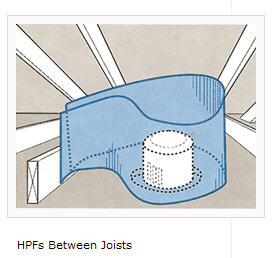
Some electrical devices located in attics, generate lots of heat when operating. If you pile insulation on top of a heat producing fixture (HPF), it could get hot enough to start a fire. Before blowing insulation into an attic, place baffles around all HPFs.

Heat producing fixtures include most recessed lights and heaters, doorbell transformers, electrical wiring connections not in junction boxes, metal flues and knob & tube wiring. Heaters with an Underwriter’s Laboratory label that says “Heater” or “Air Heater” don’t need to be baffled. The same is true of newer recessed lights that are rated “IC,” which means they can be covered with insulation. They must have an identifying label. The label could also be on the outside of the housing, visible from the attic. If it’s inside the housing, you’ll have to remove the light bulb and maybe the trim piece that fits inside the housing to find the label. If you don’t see any of these labels, then you must baffle the fixture.


Baffles should be made from a solid, flame resistant material. Wide metal flashing makes a great baffle (except for use around wiring). It’s easy to bend, can be fastened with staples, and cuts easily with a utility knife.  In some areas, fiberglass insulation batts can be used as baffles. Treated cardboard, sometimes used to baffle attic vents, is not acceptable for baffling HPFs. Baffles must be be firmly attached to something in the ceiling structure, such as the ceiling joists, rafters, or roof sheathing.

Read more at: http://oikos.com/library/weatherization/hpfs/hpfs.html