
State Puts Soitec Solar Project on Fast Track

California is streamlining government approvals for two prospective solar farms in East County, giving a boost to the French semiconductor company Soitec as it expands solar manufacturing at a factory in San Diego’s Rancho Bernardo neighborhood.

Aided by a $25 million grant from the Department of Energy, Soitec outfitted its local factory and ramped up production in earnest this year to supply an initial slate of utility-scale projects.

Two of Soitec’s prospective solar projects near Boulevard — Rugged Solar and Tierra del Sol — recently earned a form of fast-track designation by Gov. Jerry Brown.

Under legislation signed in 2011, the California Environmental Leadership Award streamlines any legal challenges to environmental permitting for designated projects, providing for an state appeals court decision within a six-month time frame.

“It really adds certainty to getting the project done,” said Clark Crawford, vice president of sales and business for Soitec in San Diego.

Read more at: http://www.utsandiego.com/news/2013/jul/03/soitec-solar-fast-track/

Hydro Plan Proposed for San Diego County

dam

A major new hydroelectric project could vie to fill the energy gap from the shutdown of the San Onofre nuclear plant, according to an announcement Monday by the San Diego County Water Authority.

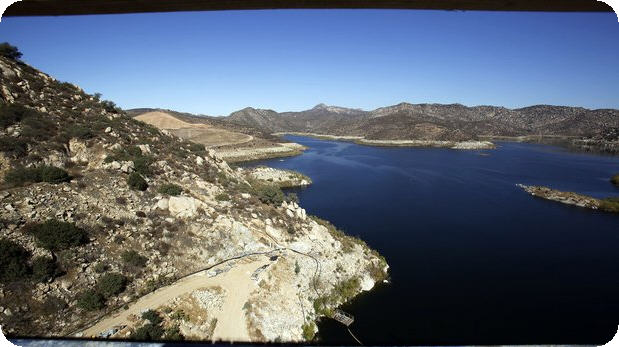
The water authority is assessing the potential for a pumped-water storage facility above the existing San Vicente Reservoir north of Lakeside, owned by the City of San Diego. Power would be generated during periods of high-electricity demand by allowing water to flow downhill to the recently expanded main reservoir, to be pumped back up during periods of lower electricity needs.

Does energy consumption effect the value of your home?  Contact the  appraiser at www.scappraisals.com for your  value questions.

The authority already operates a 40-megawatt pumped storage project connecting Hodges Reservoir and Olivenhain Reservoir, in which water falls 770 feet through a 1.25-mile pipeline.

At San Vicente, authorities are contemplating a much larger facility capable of producing as much as 500 megawatts of electricity in short bursts — enough to power about 325,000 homes.

With the announcement in early June of San Onofre’s permanent retirement, utility officials have pushed state regulators to authorize construction of a new, rapid-fire natural gas plant south of San Diego in unincorporated Otay Mesa.

San Diego Gas & Electric asserts that the Pio Pico Energy Center — a 300 megawatt, quick-start power plant — is needed to ensure reliable supplies as the state ramps up production of large-scale wind and solar plants, whose production fluctuates with the weather. A coalition of environmentalists and consumer advocates say SDG&E overstated the immediate need for new generators and shortchanged contributions of energy efficiency and other utility-run conservation programs paid for by customers.

The pumped storage project at San Vicente would rely on a new reservoir holding 10,000-acre-feet of water, located at a higher altitude. Four potential sites have been identified adjacent to the main reservoir or nearby.

The San Vicente Reservoir, by comparison, will hold up to 242,000 acre-feet of water when construction to expand the dam is completed later this year.

read more at: http://www.utsandiego.com/news/2013/jul/08/hydroelectric-replaces-nuclear-energy/all/?print

Pollution Hot Spots In San Diego-External Obsolscence?

Barrio Logan, a port community at the intersection of freeways and industry, is the crossroads of pollution risk for San Diego County, according to CalEnviroscreen, a new state program that ranks communities by their environmental health.

The California Environmental Protection Agency recently rolled out the program to highlight areas most affected by pollution. Also high on the list for this county are parts of Escondido, Chula Vista, National City and El Cajon.

Does pollution effect the value of your home?  Contact the appraisers at www.scappraisals.com for your home value and real estate appraisal questions.

The program is something that various public-health and environmental groups have long sought: a way of analyzing the combined effects of multiple pollutants along with residents’ susceptibility to their risks. But reducing pollution at the worst sites will require state funding — at the expense of other needs competing for the same money.

The report measures air and water pollution, diesel exhaust, toxins and other factors to calculate pollution burdens of communities at the ZIP code level. It also evaluates socioeconomic and health factors such as asthma rates, poverty and ethnicity to determine the population’s vulnerability to pollution.

The final ranking is the product of the pollution and population scores, with the highest scores highlighting the most environmentally impaired communities. Those areas are entitled to funding for environmental cleanup or sustainable development through the state’s greenhouse gas cap-and-trade program.

read more at: http://www.utsandiego.com/news/2013/jul/08/tp-state-program-ranks-pollution-hot-spots/

Disclaimer: for information and entertainment purposes only