
Will 2013 Be the Year to Buy a Home?

Bidding wars. Buyers paying cash. Homes selling for more than asking price.

Are we entering another housing bubble? No. But prospective buyers in many markets may be shocked at the competitive nature of the home-buying process these days.

Need an appraisal?  Contact the appraisers at: www.scappraisals.com

The number of homes for sale fell to a 13-year low in January, leaving would-be buyers chasing a shrinking supply of homes just before the spring selling season.

“On a national scale, the market is clearly rebounding,” says Greg McBride, senior financial analyst at Bankrate.com. “It’s not that the prices are crazy, but the buyers outnumber the available homes for sale.”

There was an average of 4.8 months of supply of existing homes for sale in the fourth quarter, according to the National Association of Realtors (that is, it would take 4.8 months to sell off the inventory at the current pace).

Six months’ supply is closer to normal, says Celia Chen, a housing economist with Moody’s Analytics, an economic research firm. In 2010, it went as high as 10 months. “Prices are starting to rise as a result of the strong demand relative to low supplies,” says Ms. Chen.

That said, prices still are about 30% below their peak, she says. And the reasons for the slim pickings aren’t good news. Lenders are taking their time putting bank-owned properties on the market, in part to keep prices up.

Plus, prospective sellers are waiting until prices rise before listing their homes for sale. About 11.9 million homeowners are still underwater—that is, they owe more on their mortgage than the home is worth—according to estimates from Moody’s Analytics.

Read more at: http://online.wsj.com/article/SB10001424127887324048904578316022419262576.html

Disclaimer: for information and entertainment purposes only

Short Sales Falling Apart

short

Fannie Mae’s asking price: $260,000, or roughly 30 percent above the highest comparable sale in that area.

Need to know what the property would probably appraise at?  Contact the appraisers at www.scappraisals.com for your appraisal questions.

That offer was actually made by Bank of America on behalf of Fannie Mae. As with many loans, one company can own the loan and another company can service it. Servicing a loan means accepting and managing mortgage payments from borrowers.

Fannie Mae gives loan servicers a minimum price that it’s willing to take in a short sale. The mortgage-finance company says it will even consider “close” offers, Wilson said.

Responsibility delegated

If the buyer’s offer doesn’t meet the minimum, then servicers like Bank of America negotiate on Fannie’s behalf. This delegated responsibility, in fact, was expanded in the fall as a way to speed up short sales.

If a buyer wants to dispute the Fannie Mae value, then the servicer can send it to Fannie Mae for review.

That happened in DePlachett’s case. Analysis of comparable condos, either listed at or sold for sub-$200,000, were turned in along with other market details.

Read more at: www.utsandiego.com/news/2013/mar/02/tp-short-sales-falling-apart/?page=2

Disclaimer: for information and entertainment purposes only
Do Your Ducts Need Work?

duct

Although many homeowners consider duct cleaning a way to make their indoor air cleaner, research on whether it can really create a healthier home is in the early stages.

The Environmental Protection Agency recommends looking into duct cleaning after fires, floods, pest infestations and in hazardous waste situations, or if you can see particles coming out of your ducts. Otherwise, the agency says it’s not necessary for the average household.

Does poor duct work effect value?  Contact the appraisers at www.scappraisals.com for your value questions.

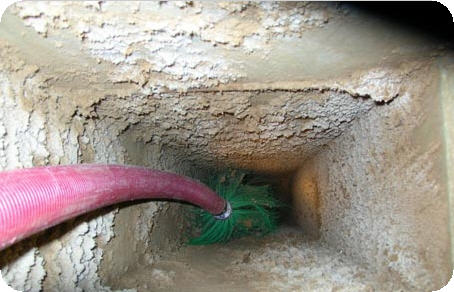
Tom Keys, president of Atlantic Duct Cleaning in Sterling, Va., says his company has done more than 80,000 duct-cleaning jobs, and that many customers report back that they have better air quality, a cleaner home and lower energy costs. Customers often are surprised at how much debris collected in their ductwork over the years, he says.

“Most of the people who do it, do it for peace of mind,” Keys says. His company has found all sorts of items in ductwork beyond dirt and grime, including class rings, rare baseball cards and construction debris from when the home was built.

Keys encourages homeowners to ask duct-cleaning technicians for evidence that there is dirt in the ducts that should be removed.

Jodi Araujo, executive director of the National Air Duct Cleaners Association, says homeowners can tell when ducts are dirty by simply removing a register cover, inserting a camera and clicking a photo.

On the other hand, John DeSilvia, a contractor and host of DIY Network’s “Rescue My Renovation,” doesn’t generally recommend duct cleaning to homeowners. It’s normal for dirt to accumulate and stick to the sides of air ducts, he says. The exception, he says, is if there’s visible mold growth.

If you do have ductwork cleaned, he advises getting a few estimates and ensuring that the service you hire uses high-powered equipment to capture what they dislodge. Otherwise, the effort could backfire.

“Any dust and dirt not collected will be distributed throughout your home, causing a bigger problem,” DeSilvia says.

If you decide to get your home’s ductwork cleaned, expect to pay between $400 and $800 if there’s one HVAC (heating, ventilation and air conditioning) system. If you have more than one zone, you could pay more. That’s because duct cleaners don’t just clean the ducts; they also clean the furnace and air handler for each unit, which could extend the life of your appliances.

In addition, they can identify any places where a duct has become unsealed, torn or flattened, preventing good airflow. Many professional duct cleaners recommend having a system cleaned every five to eight years.

Read more at: www.utsandiego.com/news/2013/mar/02/tp-do-your-ducts-need-work/?print&page=all

Disclaimer: for information and entertainment purposes only