
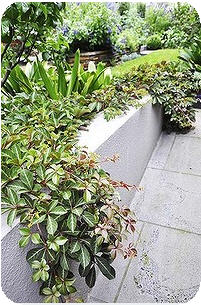
Retaining Walls: Bad Design Could Lead to a Multitude of Problems

A badly designed retaining wall can lead to a multitude of problems in your yard.

Given the potential resale value of property, a garden design should always maximise land space to best capitalise on your investment.

On a sloping site, installing retaining walls will provide more usable level space. Not only is this great for families but it can add significantly to the value (contact the appraisers at www.scappraisals.com to help you determine what adds value to your property) of the property.

A retaining wall levels sloping ground by creating a rapid change in ground level. The wall must not only hold the earth back from collapsing, but also look good.

The most important part of the construction of retaining walls is the engineering of the foundation, all of which is underground.

Any retaining wall more than a metre high needs a builder’s permit to ensure structural integrity. A balustrade may also be required on the upper level for safety.

There are two types of walls – solid and porous.

read more: http://smh.domain.com.au/real-estate-news/great-barrier-grief-20120427-1xoku.html

Disclaimer: for information and entertainment purposes only.
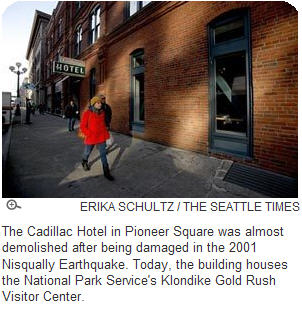
Study – Making Old Buildings Green has More Return Than New Green Buildings

The $350,000 study measures the effects of new construction compared with retrofitted buildings in four cities: Portland, Phoenix, Chicago and Atlanta.

It takes into account effects on the environment — for example, whether runoff from a building adds nutrients to a river, causing algae bloom and lower water quality — and whether a project uses nonrenewable resources like fossil fuels.

Contact the appraisers at www.scappraisals.com for your home value questions regarding updating your existing home.

The report also factors in the amount of additional energy that will be needed to extract resources like metal ores as they become more scarce.

The conclusion was that even the most energy-efficient new buildings have to stand as long as 80 years before their energy savings offset the negative environmental impacts of constructing them.

The report confirms a long-held belief of many in the green building/sustainability field, though it is the first piece of comprehensive research to back up the theory.

“In general, this study finds that building reuse almost always yields better results than new construction,” said Patrice Frey, director of sustainability at the National Trust for Historic Preservation.

Read more at: http://seattletimes.nwsource.com/html/businesstechnology/2018110139_oldgreen01.html

Disclaimer: for information and entertainment purposes only

Replacing Roof – Is Putting New Shingles Over Old Worth the $ Savings?

Q: I have an asphalt-shingle roof that I am thinking of replacing.

In our neighborhood I have seen other roofs replaced. Some have had the old shingles removed and others have had the new shingles installed over the existing ones. Is one way better than the other?  I imagine putting new shingles over the old ones is cheaper, but is it as good?

A: It is cheaper, but I’ve never considered it wise. My roof was done just before I bought the house, and I’ve seen just one layer underneath. Most of my neighbors have new roofs, and the roofers took off the old to make sure the decking was solid and what needed to be replaced was done.

If there is just one layer of shingles on the roof and you are adding one more, then, yes, it might be all right. From what I’ve read, most roof structures can support a couple of layers of shingles without causing problems.

It is important, however, that the roof underneath be able to accommodate the one being installed on top of it. If a lot of the old shingles are curled, the new ones might assume that shape.

Does the existing roof leak? You might be covering it over rather than repairing it. There is also a manufacturer’s warranty to check out before anything is done to make sure that you don’t inadvertently void it.

Thanks to Al Heavens at the Chicago Tribune for this content

Disclaimer: for information and entertainment purposes only