
Electric Car Makers Looking to Seize Opportunity

To drivers, the high price of gasoline is a scourge. To the electric car industry, it could be a game-changer.

Nissan’s electric Leaf and the Chevy Volt plug-in hybrid both hit dealer showrooms in late 2010, riding a wave of carefully cultivated hype. But first-year sales were lackluster at best, as consumers balked at the high sticker prices and unfamiliar engineering.

This year’s gas-price spike could change that.

Technology that looked like a gamble to many car buyers last year might look more like an insurance policy now.

“Every time it goes up, my phone rings a little more,” said Ron Coury, with the Northbay Nissan dealership in Petaluma. “It’s the ones who’ve been sitting back and watching, and now they’re sticking their feet in the water.”

Nissan and General Motors, which makes the Volt, have a chance to reset their marketing campaigns. Other companies introducing electric cars this year – including Ford, Mitsubishi, Coda Automotive and Tesla Motors – could benefit from the timing in a way that GM and Nissan couldn’t in 2010.

Read more: http://www.sfgate.com/cgi-bin/article.cgi?f=/c/a/2012/03/24/BU771NOQ0U.DTL#ixzz1q9ae7IUQ
 
Disclaimer: for information and entertainment purposes only

New Rules on Debt Could Hinder Seekers of FHA Loan

WASHINGTON — A little-noticed mortgage-rule change that took effect April 1 could create hassles for significant numbers of homebuyers who plan to use low down-payment FHA financing this spring.

The change affects anyone with one or more “collection” accounts buried in national credit-bureau files. These include medical, student loan, retail and other debts reported as unpaid — correctly or incorrectly — by creditors and sent to collection agencies.

Contact the appraisers at www.scappraisals.com for a FHA appraisal and inspection.  Our appraisers are FHA certified.

In a reversal of its previous policy, the Federal Housing Administration says it will no longer approve applications where the borrowers have outstanding collections or disputed accounts with an aggregate of $1,000 or more of unpaid bills.

Previously the agency took a more lenient approach, allowing lenders to review borrowers’ overall credit situation and approve applications despite the presence of such accounts.

Under its new rule, when collection items total $1,000 or more, the accounts will need to be paid off over several months or be paid in full at or before the closing.

In cases where the collections or disputed debts are attributable to identity theft, credit-card theft or unauthorized use of the applicant’s credit — or when collection accounts total less than $1,000 and are at least 2 years old — the new rule may be waived.

The policy shift, which the agency says is part of its ongoing efforts to reduce loan defaults and insurance claims, has upset some mortgage lenders who specialize in FHA business

Read more at: http://seattletimes.nwsource.com/text/2017919739.html

Disclaimer: for information and entertainment purposes only

Wood Gas Can Power a Truck

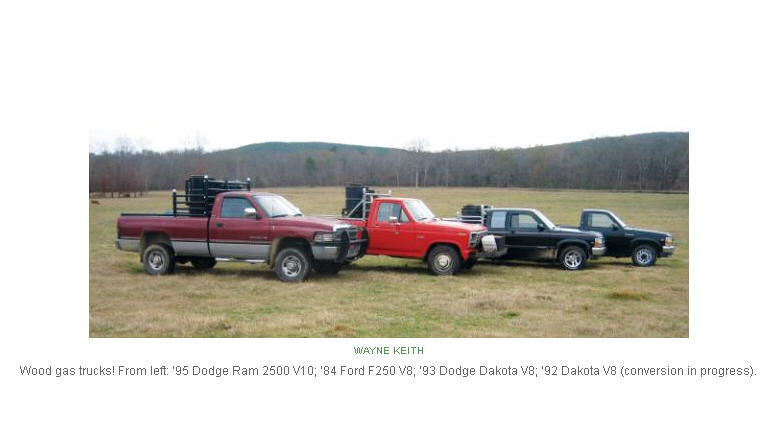
Back in 2004, Wayne Keith drew a line in the sand at $1.50. That’s the price at which the Alabama native would no longer buy a gallon of gasoline. Keith, who makes his living raising cows, growing hay and milling timber in a small town about 30 miles northeast of Birmingham, wasn’t bluffing. He knew he had an alternative fuel in his backyard: the hundreds of pounds of scrap wood he generates every time he runs his sawmill.

Since 2004, Keith has powered his trucks with wood. Sound strange? Trust me, this is no pipe dream. Many years ago, when I managed the MOTHER EARTH NEWS research facilities in North Carolina, we built wood-powered vehicles for the same reasons Keith does today. But Keith has taken wood gasification well beyond what I could’ve imagined. This unassuming, down-to-earth farmer is an energy and transportation pioneer, with more than 250,000 miles of wood gas driving under his belt and about $40,000 saved by using wood chunks instead of gasoline.  

“My Dodge Dakota truck gets about 5,200 miles per cord,” Keith says in his easygoing Southern drawl. (A cord is a common measurement for wood, meaning a wood stack 4 feet deep by 4 feet high by 8 feet long.) “I paid for my farm in the early 1990s by selling wood at $27 per cord. Today a cord costs about $50 [wholesale] in this area. I burn scrap wood from my sawmill, but if I had to buy wood, I could still travel for less than a penny a mile.”

For comparison, if gasoline costs $3.50 a gallon, your vehicle would have to achieve nearly 350 miles per gallon for its driving cost to be a penny per mile.

 
Disclaimer: for information and entertainment purposes only