
San Diego home prices increases fall behind other Calif cities

San Diego County home prices in June increased 6.9 percent in a year, faster than the nationwide average but slower than other California cities, said the S&P CoreLogic Case-Shiller Indices released Tuesday.

Out of all the regions covered in the 20-city index, San Diego prices increased the eighth most in a year, tied with Tampa. Las Vegas had the biggest gain at 13 percent.

Nationwide home prices were up 6.2 percent, less than California on the index, including Los Angeles (7.4 percent) and San Francisco (10.7 percent).

San Diego had the second-slowest price increase of any city in the West, behind Portland with a 5.8 percent increase in a year. America’s Finest City spent several months in 2017 at the No. 3 spot on the index — outpacing other California cities and big markets like Denver, Boston and Atlanta.

“It’s a notable drop,” said Trulia economist Felipe Chacon. “It’s definitely not growing as quickly as these other places now.”

He said San Diego’s home price increases are still high, but wages in the region may explain why prices are going up slower than other California cities.

read more at: http://www.sandiegouniontribune.com/business/real-estate/sd-fi-case-shiller-20180828-story.html

disclaimer for information and entertainment purposes only
US Pursues One of the Biggest Mortgage Fraud Cases Since the Crisis

Owners of an apartment complex near Pittsburgh, who wanted to take out a mortgage on the buildings, allegedly made vacant units look occupied by turning on radios, placing shoes and mats outside doors and in one instance having a woman tell inspectors her boyfriend was asleep inside.

The owners obtained a $45.8 million loan, which was wrapped into mortgage securities and sold to investors.

Practices such as these—which were alleged in a federal search-warrant application—have sparked one of the largest mortgage-fraud investigations since the financial crisis. It focuses on whether income from commercial properties was falsified, a move that would enable owners to get larger mortgages and take out cash or expand their businesses faster.

Still in its early stages, the investigation has so far yielded a fraud-conspiracy indictment against four real-estate executives in upstate New York. Loans that some or all of them were involved with totaled about $170 million, the indictment alleges.

Investigators have sought mortgage data on dozens of other apartment buildings, according to documents reviewed by The Wall Street Journal and interviews with people familiar with the probe. Investigators have looked at student housing and self-storage facilities in addition to apartment complexes.

About $1.5 billion of securities issued by Fannie Mae and Freddie Mac are backed by mortgages from just one developer who has been under scrutiny, according to a Journal analysis of loan data from Thomson Reuters .

Read more at: https://www.wsj.com/articles/u-s-pursues-one-of-the-biggest-mortgage-fraud-probes-since-the-financial-crisis-1534357872

Disclaimer: for information and entertainment purposes only

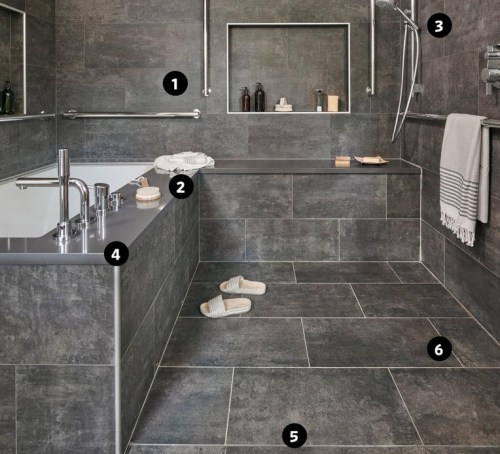
Do you have clients that want to age in place? Clients that want to sell homes in 55+ communities. Check out these design elements.

bath 1

bath 2

American baby boomers are reaching retirement age at a rate of 10,000 a day, according to AARP. But apparently they’d rather regale friends with apocryphal recollections of being at Woodstock than contemplate their own mortality and plan for their dotage, even though they risk paying dearly for such shortsightedness.

“Falls are the leading cause of fatal and nonfatal injuries among older persons,” said Erik Listou, co-founder of the Living in Place Institute, who modified the accepted term “aging in place” (AIP) when he co-founded it, because “nobody wants to talk about getting old.” The Denver-based educational organization trains medical professionals, Realtors, designers, and contractors in AIP principals. “The cost of a fall is estimated at around $34,000 in just direct medical expenses,” he continued. And according to Genworth Financial’s 2017 Cost of Care Survey, the national annual median for assisted living is $45,000 (as high as $72,000 in some states), so making your home safe enough to maintain your independence clearly makes economic sense, what with the average midrange bathroom remodel costing about $19,000, according to Remodeling magazine.

But it isn’t the cost that causes clients and builders to avoid the topic. After all, many AIP modifications, such as replacing knobs on cabinets, faucets and doors with pulls and levers, can be made without a major overhaul. Homeowners fear that AIP will look ugly and institutional. One glance at a bathroom grab bar and most of us can smell disinfectant and hear the squeak of nurses’ shoes.

read more at: https://www.wsj.com/articles/decorating-strategies-to-live-at-homestylishlyinto-your-80s-1535046802

Disclaimer: for information and entertainment purposes only