
Tag Archives: appraisal

Home Seller Confidence Improving

The share of Americans who believe now is a good time to sell a home has risen, says a survey from mortgage giant Fannie Mae on Monday.

Of those surveyed in May, 40 percent felt confident about their ability to sell, up from 30 percent in April and up 16 percent from the same time a year ago. The uptick, the largest one in the survey’s three-year history, is likely linked to news of home-price increases.

Want an unbiased opinion of value of your property before contacting the real estate agents;  contact the appraisers at www.scappraisals.com

“Sentiment toward selling a home appears to be catching up with the strengthening housing market,” said Fannie Mae chief economist Doug Duncan, in a statement.

Potential buyers are feeling more confident, the survey says. Seventy-six percent of those surveyed said it’s a good time to buy a home. That’s the highest percentage in the survey’s history.

Realtor Mike Wolf, of Ascent Real Estate in San Diego, says the trends from the report are also reflected locally.

“I think it’s a good time to do something, whether it’s buying or selling,” Wolf said.

Because of recent home-price gains, some property owners who believe they’re still trapped by negative equity could be in a position now to sell. However, fear and lack of knowledge may be keeping some potential sellers from jumping into the hot real estate market, Wolf said. He says there’s a lot of waiting-and-seeing.

Wolf’s observations are supported by the number of homes on the market. There are about 4,800 listings right now, a nearly 7 percent increase from last month but a 22 percent drop from a year ago, according to numbers from the Greater San Diego Association of Realtors. The month-to-month uptick can be attributed to seasonality — people tend to move during the summer. Despite that uptick, Wolf says the county is still undersupplied.

Read more at: http://www.utsandiego.com/news/2013/jun/11/tp-home-seller-confidence-improving/

Disclaimer: for information and entertainment purposes only
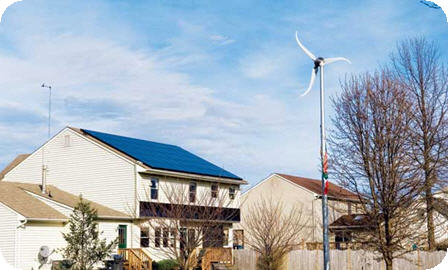
Considering Wind Power? Is a Home Wind Turbine Right for You?

wind

So maybe you’re thinking you want to generate your own electricity, and home wind power has crossed your mind. After all, who really enjoys paying a utility bill? Small wind energy is renewable, non-polluting, and, in the right circumstances, can save you money.

Will a wind turbine add value to your property?  Contact the appraisers at www.scappraisals.com for your value questions.

But is home wind power a good choice for you? The answer may surprise you, because living in a windy area is not necessarily the most important factor. In fact, many properties are not a good fit for installing a wind turbine even if they have a lot of wind (for reasons we’ll get into). On the other hand, if you want to go off-grid and produce your own electricity, you almost certainly want to consider installing a home wind turbine, even if your location is not notably windy.

Off-Grid Residential Wind Power

Here’s the deal: For a home wind turbine to be worth your investment, you really need to live on an acre or more. That’s the guideline from the U.S. Department of Energy’s Guide to Small Wind Electric Systems, a free publication for homeowners. Living in a rural area helps, because if you’re in a residential neighborhood, you’re likely to run into conflicts with zoning and local homeowners associations. Additionally, you’re more likely to find a high average wind speed in wide open spaces far from windbreaks such as buildings and trees. Altogether, while installing a small wind turbine in a city or suburb is certainly possible, you’re much more likely to have the right conditions for home wind power if you live well outside city limits.

Read more: http://www.motherearthnews.com/renewable-energy/home-wind-power-zm0z13amzrob.aspx?newsletter=1#ixzz2TebNj4FH

Disclaimer: for information and entertainment purposes only

Equity Credit Lines and Second Mortgages are Making a Comeback

WASHINGTON — Using your home as an ATM no longer is a financial option, but the tools that allowed owners to pull out massive amounts of money during the boom years — equity credit lines and second mortgages — are making a comeback.

Want to take that money and add value to your home?  Contact the appraisers at www.scappraisals.com for your value questions.

Banking and credit analysts say the dollar volumes of new originations of home equity loans are rising again, significantly so in areas of the country that are experiencing post-recession rebounds in property values. These include California, Arizona, New Mexico, most of the Atlantic coastal states, the Pacific Northwest, Texas and parts of the Midwest.

Not only have owners’ equity positions grown substantially on a national basis since 2011 — up an estimated $1.7 trillion during the last 18 months, according to the Federal Reserve — but banks increasingly are willing to allow owners to tap that equity. Unlike during the credit bubble years of 2003-06, however, they aren’t permitting owners to go whole hog: mortgaging their homes up to 100% of market value with first, second and even third loans or credit lines.

Now major lenders are restricting the combined total of first and second loans against a house to no more than 85% of value. For instance, if your house is worth $500,000 and the balance on your first mortgage is $375,000, you’d probably be limited to a second mortgage or credit line of $50,000.

Contrast this with 2007, the high-point year of home-equity lending, when many lenders offered “piggyback” financing packages that allowed 100% debt without private mortgage insurance. A buyer of a $500,000 house could get a $400,000 first mortgage and a second loan of $100,000.

That ultimately didn’t work well for the banks. During the third quarter of 2012 alone, according to federal estimates, banks wrote off $4.5 billion in defaulted equity loans, often in situations in which homeowners found themselves underwater and behind on both first and second loans.

In such a situation, second mortgages become essentially worthless to the bank since in a foreclosure, the holder of the first mortgage gets paid off first. On underwater foreclosures, the second loan holder is left holding the bag.

Read more at: http://articles.latimes.com/2013/apr/19/business/la-fi-harney-20130421

Disclaimer: for information and entertainment purposes only