
Tag Archives: home

Learn House’s Cutoff Switches Before an Emergency Stikes

Controls and monitors for heating, cooling, power and other systems are crammed into cluttered dashboards in cars. In houses, they’re spread all over, sometimes in plain sight, often tucked away where you wouldn’t expect them or have a clue what they regulate.

There are dozens of kill switches and cutoff valves, but no map showing where they are and no manual explaining what they control and how to use them. That’s a problem in the dark, in a flood or other emergency when you need to isolate a problem in the house. Is this the right handle, the right valve? Turn it left or right, push it up or down? Pop the breaker, but which one?

Mains. Power comes into the service panel to doubled breakers, called the mains. They feed power to the rows of breakers below. Normally, if a single breaker trips, the mains stay engaged and power still flows to most of the home. Tripping the mains cuts off power everywhere.

Circuits. Each one has a breaker. It may protect several outlets or one high-use appliance like an electric stove. Labeling breakers so you know what they control ought to be part of every installation. But you may have to make your own labels. Otherwise, to check a minor problem at one outlet, you have to trip the mains. You can use circuit-tracing tools (check sperryinstruments.com) to discover what each breaker controls. In renovated homes it may be an illogical hodgepodge. Or you can take the tedious route, work with a partner room by room, turn everything on, then trip one breaker at a time to see what goes off.

Read more at:http://www.chicagotribune.com/classified/realestate/home/sc-home-diy-home-control-20121101,0,2457008.story

Disclaimer: for information and entertainment purposes only
The (Almost) All-American Home

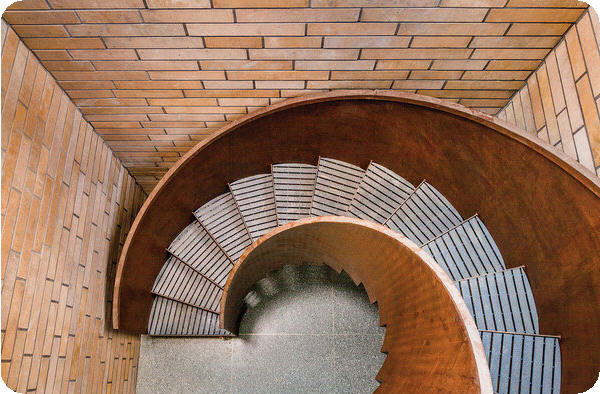
Chocolate limestone from Lueders, TX

When Karen Lantz, a Houston architect, was in high school, the Armco steel plant where her father had worked for two decades shut down.

“He was 47,” she said. “It was tough.”

He found other jobs, but the financial loss stung, and the family’s options became more limited.

Lantz put herself through community college and then architecture school at the University of Houston. Now 37, Lantz is a working architect, but in 2009, when she started planning her dream house in the grip of a recession, her father’s experience weighed on her.

People all over the United States were out of work; if she bought American-made products for the house, she could do her part. But how far could she take it? Was it possible to build a house entirely of products made in America?

Will this add value to your home?  Contact the appraisers at http://www.scappraisal.com for your value questions.

Some things were easy. Lantz traveled to a quarry in Lueders, Tex., to find chocolate-brown limestone. The marble chips that made up her terrazzo came from Marble Falls. She found Heatlok Soy 200 foam insulation in Arlington and windows manufactured in Stafford. Other items required her to look further afield: Lantz bought shower drains from Iowa, a skylight made in South Carolina, hose valves made in Alabama, fences from California and baseboards from Georgia. She developed the skills of a private investigator.

Read more at: http://www.nytimes.com/2012/10/14/magazine/the-almost-all-american-home.html?_r=1&ref=realestate

Disclaimer: for information and entertainment purposes only
Make a Home from Shipping Containers

Tim Bessell has spent the last 25 years crafting surfboards for world-class athletes out of his understated shop near La Jolla’s Windansea Beach.

The 54-year-old Bessell, who grew up in La Jolla, says the thinning custom surfboard market in the United States and a lifelong appreciation for architecture have pushed him toward another passion: sea-container home building.

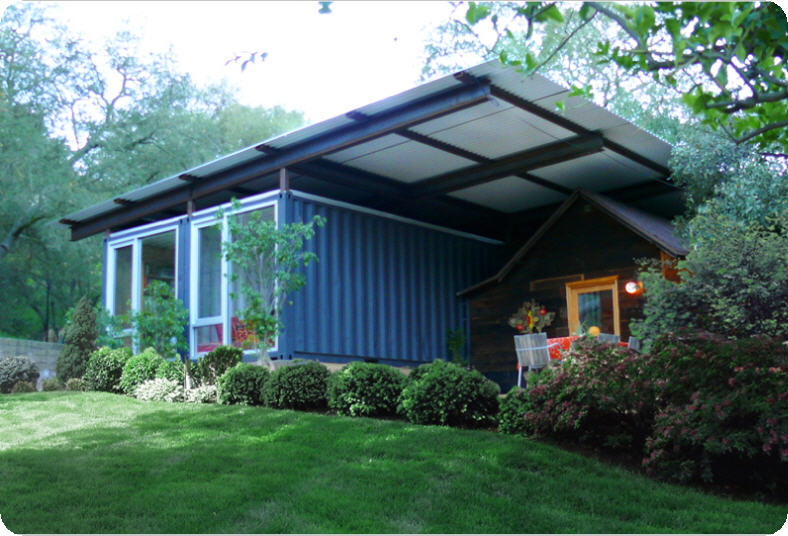
The idea is to take discarded, yet still-sturdy steel containers found at ports and convert them into habitable spaces. Container home advocates say this type of construction is more “green,” and over time, can be more cost-effective.

Bessell and business associate Claude Anthony Marengo hope to break ground soon on their first custom project in Pacific Beach, believed to be the city of San Diego’s first certified factory-made home constructed from steel shipping container material. The closest structure to that is the Periscope Project in downtown San Diego that hosts art shows and serves as office space.

Bessell spoke with the U-T San Diego about his current project, a three-story home slated to be done by September, how it will be built and the costs involved.

Read more at: http://www.utsandiego.com/news/2012/may/07/tp-container-enthusiasm/

Disclaimer: for information and entertainment purposes only