
Tag Archives: real estate appraisal

7 Ways to Fix Time-Wasting, Annoying Hassles at Home

Every home has a few bottlenecks where things could run more smoothly. Some become an annoying or time-wasting hassle; others can cause maintenance and repair problems. We’re talking omissions, not mistakes. Here are seven problem solvers that are not included in most homes but are worth adding later.

Jackshaft garage-door openers Standard openers hang down from the garage ceiling and drag the door up. But if you need the room for storage or clearance, a jackshaft opener solves the problem. It mounts on the wall next to the door and turns the main shaft directly without cables or chains. The compact units need only about 8 inches beside the door, plug into a standard outlet, and work with all modern safety equipment. I installed a Liftmaster 3900 (details at liftmaster.com) for sectional doors because the new pickup was too tall for a standard opener.

Electrostatic air cleaners Installed at the end of the forced-air return duct, these appliances include a standard, removable, dust-trapping pre-filter, and behind it is a stack of electrically charged metal fins. With alternate charges, one positive, the next negative, impurities blowing past the prefilter cling to the fins. They’re spaced widely enough not to reduce airflow, and the frames holding them are removable so you can clean the filters periodically in the dishwasher. Some units can remove 95 percent of airborne pollen, 80 percent of smoke particles and other microscopic pollutants.

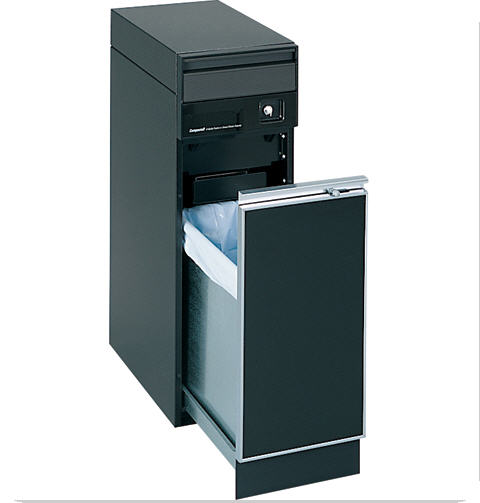
↑ Trash compactors In the space of a single lower cabinet, compactors pull open like trash bins, but a ram inside compresses a full bin to one-sixth its normal size. They save space, time and energy with fewer trips to haul out garbage and fewer drives to the recycling center — and save money on pickup fees based on volume. Compactor rams can apply enough force to crush cans (3,000 pounds of pressure), but plug into a standard outlet and use about half as much electricity per month as a microwave oven.

Read more at: http://www.chicagotribune.com/classified/realestate/home/sc-home-diy-problem-solvers-20120615,0,4727774.story

Disclaimer: for information and entertainment purposes only
Passive Solar Design Basics

Passive solar design begins with the simple idea that you can build a house that uses natural heating, cooling, ventilation and daylighting. These homes require much less fossil fuel energy to heat and cool than conventional homes do, which is better for the environment and saves passive solar homeowners money. Passive solar homes are comfortable to live in because they are designed to radiate heat in winter, maintain a comfortable year-round temperature, ventilate naturally, and let in plenty of natural light.

I became interested in sustainable design, specifically passive solar design, as a young architect — first while working in the Peace Corps in Africa, and later while working professionally in New Mexico. The details of any particular passive solar home design depend on the climate and the specifics of the site. Over the course of my 35-year career, I’ve designed a variety of passive solar houses throughout the country using different configurations of south-facing windows, sunrooms and other passive solar design features. (For specifics on one of them, read “The Western Solar Farmhouse: A Passive Solar Design” near the end of the article) What follows are the principles used to design any passive solar home.

Read more: http://www.motherearthnews.com/green-homes/passive-solar-design-zm0z12jjzphe.aspx#ixzz1yA0dOiYv

Disclaimer: for information and entertainment purposes only

Building a Net Zero Energy Home: Key Early Decisions

When I decided to rebuild my home at The Evergreen Institute in east-central Missouri, which as many readers know, burned in a fire in January 2011, I had to make some decisions before I could begin work with my architect, James Plagmann of HumaNature Architecture. 

The first decision was whether I would retain the existing foundation or start anew. In my case, the choice was made by the fire and the
building department. As it turns out, the south wall of the foundation had been so badly damaged in the fire that it had to go. That was the building department’s recommendation.

Contact the appraisers at www.scappraisals.com if you have a green property that needs appraising.

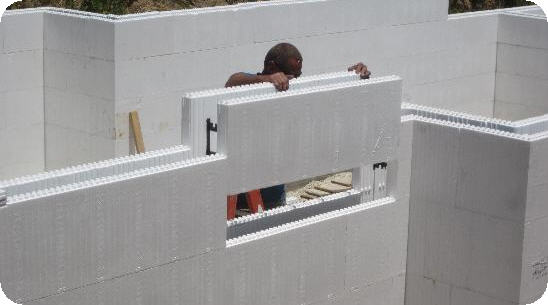
To create a net zero energy home, I knew I had to pour on the insulation. So, I decided to build with insulated concrete forms to achieve an R value of around 30. I also decided to place 5 inches of extruded polystyrene under the slab to achieve an R-value of around 30. At this writing, we’ve already poured the foundation walls.

Read more: http://www.motherearthnews.com/blogs/blog.aspx?blogid=1500&blogmonth=6&blogyear=2012#ixzz1y9wNNlUE

Disclaimer: for information and entertainment purposes