
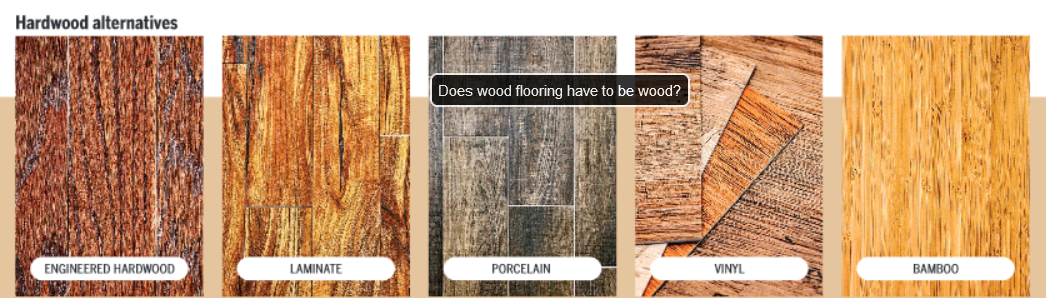
Does wood flooring really have to be wood?

Engineered materials gaining in popularity among homeowners as lower-maintenance alternative

Engineered Hardwood: Where traditional solid hardwood is just that — all wood — engineered hardwood has a veneer of hardwood but is composed of several thin layers of backing, mostly plywood, but it could also be fiberboard or unfinished hardwood. According to Pinto, the layers add stability to the overall strength of the material. Where there can be issues with solid hardwood floors contracting and expanding, engineered hardwood’s composition makes that a nonissue. It also comes with different finishes. Urethane and oil finishes are very popular, said Pinto.

Laminate: Like engineered hardwood, laminate planks are layered materials, but instead of a wood top layer, it has a high-definition photographic wood-look layer, complete with graining, and sits above a moisture-resistant, stabilizing base layer topped by a core of high-density fiberboard, all finished in resin.

Porcelain Tile: Porcelain tile planks can resemble wood, even with a textured grain. They come in a variety of styles, colors, and designs — from sleek to rustic. They’re scratch-resistant, stain-resistant and water-resistant.

Read more and entire article at: https://www.sandiegouniontribune.com/lifestyle/home-and-garden/story/2022-02-19/does-wood-flooring-really-have-to-be-wood
6 Easy Steps to Winterize your Windows

Making sure our windows are efficient makes sense–windows account for 10 to 25 percent of our heating bills because of leaked conditioned air. If you aren’t quite ready for the expense and hassle of installing new, energy-efficient windows, check out our easy ways to winterize existing windows and keep your home–and your pocketbook–comfortable.

Back to Basics

Check the perimeter. This may seem obvious, but even small cracks or other structural imperfections let hot air pour out of your home. Take a good look at your windows. Are there any easy-to-spot problems such as cracked glass, rotting wood, or obvious air or water leakage? If so, address those issues either as a DIY project or by calling a professional.

Seal it up. Now that your windows are sound, focus on caulking and weather-stripping. Use caulk for stationary cracks, gaps or joints less than 1⁄4-inch wide. Use weather-stripping for components that move.

read more at: https://www.motherearthnews.com/sustainable-living/energy-efficiency/winterize-your-windows-zm0z14sozpit/?utm_source=wcemail&utm_medium=email&utm_campaign=MEN%20GL%20eNews%2002-11-22&wc_totalkey=2tZ1wfmzc2vv1S_LrIXVWbjIAs6OV1lxvR-K-LKy7E7iNNNfqEyWiXHXC0TO-4j_e-I_d15bylKj6S-m6rfd5w

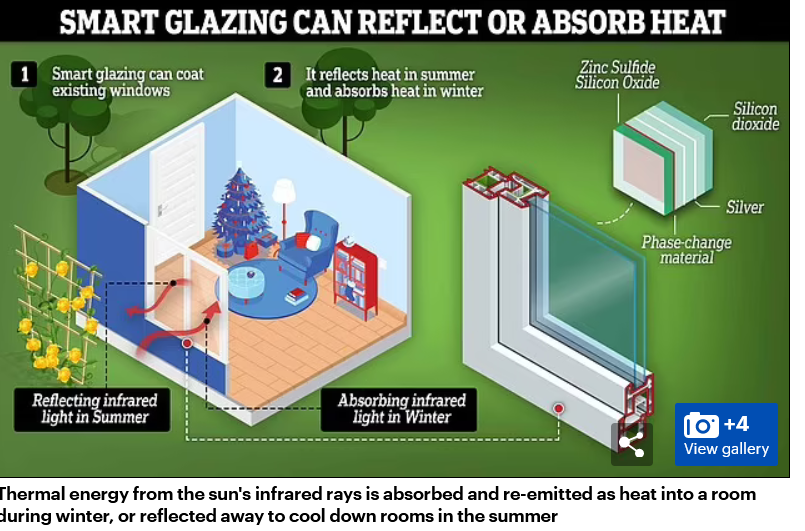
Scientist develop a smart window that absorbs heat in winter and reflects in summer

  • Scientists present a ‘smart glazing technology’ that can save household energy
  • The ultra-thin glazing could be used to coat existing windows around the home 
  • It switches its atomic structure to reflect heat in summer and absorb it in winter

Read more at: https://www.dailymail.co.uk/sciencetech/article-10493017/Smart-window-absorbs-heat-winter-reflects-summer-reduce-energy-use-34.html