
Ready to Buy Solar – Do Your Homework!

solar

One couples starting point for educating themselves on solar power was the DC Solar Tour in October 2011, which offered a great opportunity to visit solar users near their home and “ground truth” its costs and benefits.

Here in San Diego we have CCSE.  Or you can contact the appraisers at www.scappraisal.com for you home value questions; they are Southern California’s forerunners in green property appraisals.

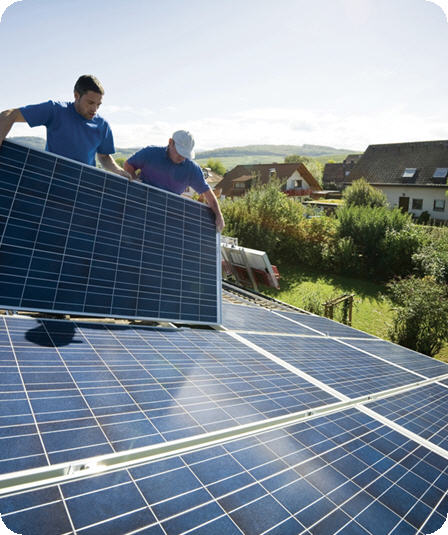
The information they gleaned from the tour confirmed that they wanted a photovoltaic (PV) rooftop system. By November, we were getting proposals from five firms, including two that operate primarily in the leasing market. We were impressed with the leasing firms — and with the idea of being able to capture the environmental benefits and a bit of the financial reward of solar power while putting very little of our own money up front. However, given our plan to stay in our home for the better part of a decade, we decided that it would be advantageous to purchase a system.

The next step was vetting several companies via calls with recent customers to assess the accuracy of their production estimates and the quality of their workmanship. We also checked reviews available through Washington Consumers Checkbook and Solarreviews.com before we ultimately hired a local solar installation company.

read more at: http://www.washingtonpost.com/blogs/where-we-live/wp/2014/09/30/benefits-of-solar-panels-clear-after-two-years/

disclaimer: for information and entertainment purposes only

San Diego – Appreciation in County Continues Downward Trend

San Diego County prices rose once again in September, but the pace continues to slow.

The S&P/Case-Shiller Home Price Index showed Tuesday that from August to September, the index grew 0.9 percent, which is down from 1.8 percent from July to August.

“As we head into the fall we should normally see a slowdown in the rate of activity in the housing market, with probably some easing of house price increases, just as a normal seasonal factor,” said Michael Lea, a real estate professor at San Diego State University.

Annually, prices rose 20.9 percent on the index from September 2012 to September 2013, slightly below San Diego’s post-Great Recession peak of 21.5 percent from August 2012 to August 2013. The county’s September year-over-year gain ranks it fourth on the 20-city index. The national average yearlong gain was 11.2 percent.

“Housing continues to emerge from the financial crisis: the proportion of homes in foreclosure is declining and consumers’ balance sheets are strengthening,” said David Blitzer, chairman of the index committee at S&P Dow Jones Indices. “The longer-run question is whether household formation continues to recovery and if home ownership will return to the peak levels seen in 2004.”

Lea said the number of sales is still below normal levels, which is causing the higher yearly price gains. He noted that rising interest rates would contribute to lower affordability and therefore lower demand and put a strain on prices. In September, the average 30-year-fixed mortgage rate was 4.49 percent, up from the 3.47 available in September 2012, according to Freddie Mac.

Read more at: http://www.utsandiego.com/news/2013/nov/26/case-shiller-real-estate-prices-index-september/

disclaimer: for information and entertainment purposes only

San Diego – Replace Your Landscaping; Make Water Efficient And Get Help

drought

Choosing plants that love San Diego County and save water is simple, because plants are grouped into four water-use categories: high, moderate, low and very low.

High-water-use plants such as cool-season turf need 44 to 55 inches of water per year. Moderate-water-use plants use 20 to 30 inches. Low-water-use plants use 6 to 16 inches per year, and very low-water-use plants use less than 6 inches.

This information allows gardeners to group plants based on their water use and irrigate them efficiently. It also allows them to estimate water savings. For instance, replacing 50 percent of a cool-season turf lawn with low-water-use plants can reduce overall water use by 35 percent.

To find plants and their water-use category, go to www.WaterSmartSDlandscaping.org, the Water Authority’s WaterSmart landscaping website.