
Should You Still Get Flood Insurance?

Homeowners will see increases in the rates they pay for flood insurance soon, if they haven’t already, with owners of vacation homes seeing the biggest jump. But that isn’t reason enough to drop coverage. Flood insurance is one of the best deals going.

Have questions about the FEMA inspection process or how to get help? Contact the appraisers at www.scappraisals.com; they are FEMA certified flood and disaster inspectors.

Though floods can bring walls of water 20 feet high, even a few inches of water can cause thousands of dollars in damage. Between 2007 and 2011, the average flood claim fielded by the National Flood Insurance Program was nearly $30,000. The cost of the typical flood policy is about $625 a year.
Don’t make the mistake of thinking that your homeowner’s policy has you covered, or that a flood won’t happen to you. According to the Federal Emergency Management Agency, which operates the flood insurance program, flooding occurs practically every day, practically everywhere. And it is costly, racking up $2.9 billion in losses between 2002 and 2011.
Disclaimer: for information and entertainment purposes only
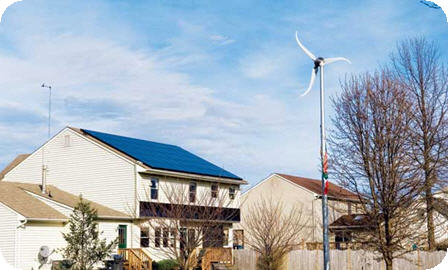
Considering Wind Power? Is a Home Wind Turbine Right for You?

wind

So maybe you’re thinking you want to generate your own electricity, and home wind power has crossed your mind. After all, who really enjoys paying a utility bill? Small wind energy is renewable, non-polluting, and, in the right circumstances, can save you money.

Will a wind turbine add value to your property?  Contact the appraisers at www.scappraisals.com for your value questions.

But is home wind power a good choice for you? The answer may surprise you, because living in a windy area is not necessarily the most important factor. In fact, many properties are not a good fit for installing a wind turbine even if they have a lot of wind (for reasons we’ll get into). On the other hand, if you want to go off-grid and produce your own electricity, you almost certainly want to consider installing a home wind turbine, even if your location is not notably windy.

Off-Grid Residential Wind Power

Here’s the deal: For a home wind turbine to be worth your investment, you really need to live on an acre or more. That’s the guideline from the U.S. Department of Energy’s Guide to Small Wind Electric Systems, a free publication for homeowners. Living in a rural area helps, because if you’re in a residential neighborhood, you’re likely to run into conflicts with zoning and local homeowners associations. Additionally, you’re more likely to find a high average wind speed in wide open spaces far from windbreaks such as buildings and trees. Altogether, while installing a small wind turbine in a city or suburb is certainly possible, you’re much more likely to have the right conditions for home wind power if you live well outside city limits.

Read more: http://www.motherearthnews.com/renewable-energy/home-wind-power-zm0z13amzrob.aspx?newsletter=1#ixzz2TebNj4FH

Disclaimer: for information and entertainment purposes only
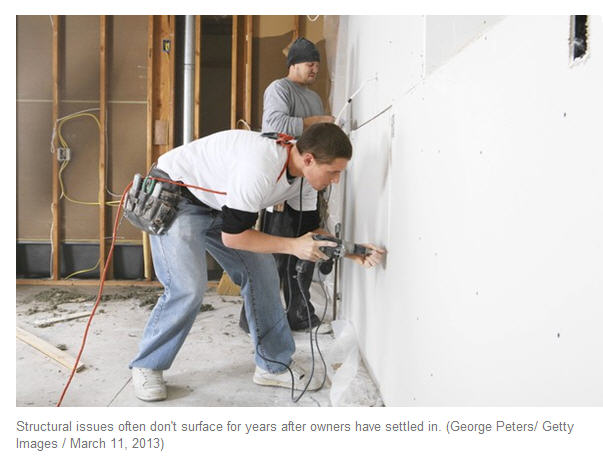
Protecting Against Structural Calamities

structure

New homes may be new, but they are rarely perfect.

Houses are giant puzzles with hundreds of parts, all manufactured at different locations and carried to the building site. And try as they might to put together a flawless product, builders and their numerous subcontractors don’t always get things right.

Luckily, buyers are more likely to have to deal with cosmetic defects than out-and-out structural failures. Scratched refrigerators, broken bathroom tiles and faulty electrical outlets are far more prevalent than badly cracked foundations or sagging roofs.

Is there value in a home with a cracked foundation or structural issues?  Contact the appraisers at www.scappraisals.com for your value questions.

But structural defects do occur. According to recently released data from 2-10 Home Buyers Warranty, owners of new homes are as likely to experience major structural damage — big cracks in the walls, windows and doors jammed shut, buckled floors — as they are a major fire.

This isn’t to warn buyers off new construction. Previous research has found that just one in 20 houses will experience a major structural hit over its lifetime. But one in every four will experience “some” structural distress.

Based on his review of more than 10,000 structural claims over a 32-year period, Walt Keaveny, chief risk manager of the Denver-based warranty company, says structural problems can occur from day one. But most claims are reported between four and seven years after initial occupancy.

Read more at: http://www.chicagotribune.com/classified/realestate/home/sc-cons-0314-home-structural-defects-20130315,0,2388781.story